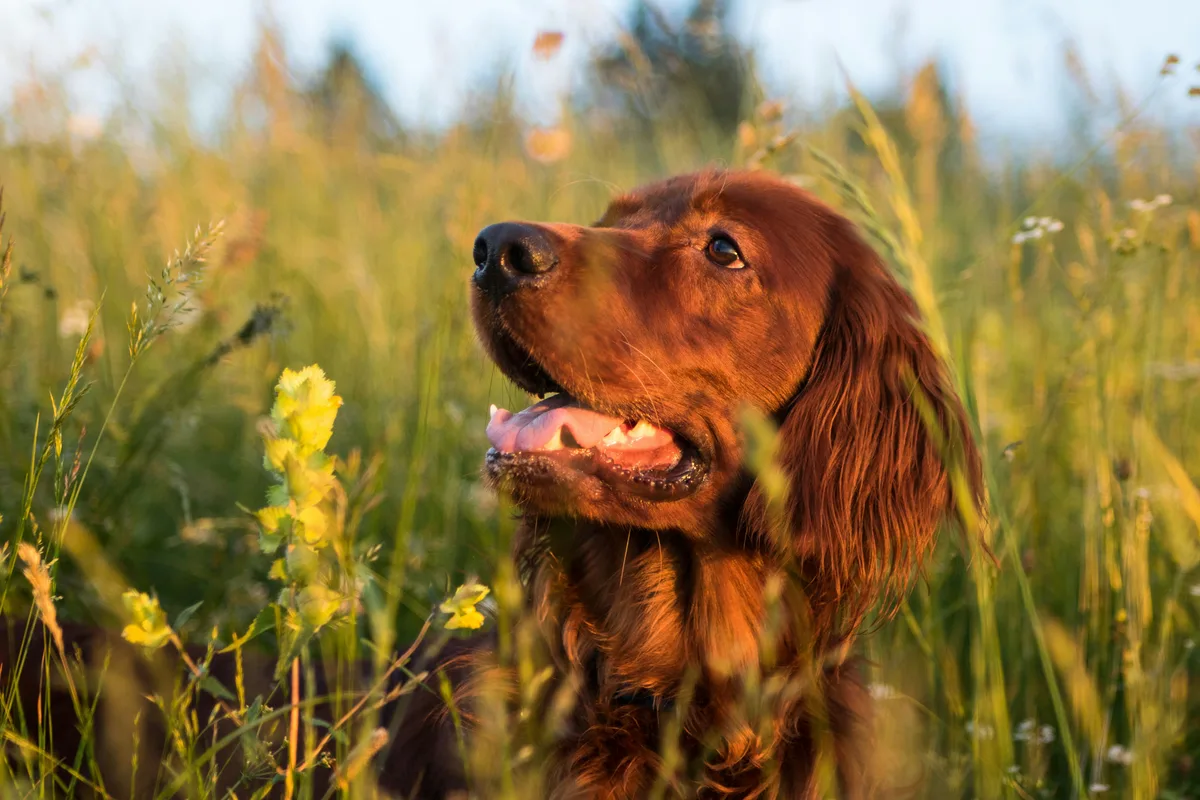
아이리시세터 성견 가이드
아이리시세터 성견 사료 가이드
아이리시세터 성견(18개월~8세): 글루텐프리 고단백 사료로 높은 활동량 지원, GDV 예방 분할 급여 프로토콜, 글루코사민으로 고관절 이형성증 예방을 위한 전문 가이드입니다.
AAFCO 성견 기준WSAVA 영양 가이드라인NRC 2006 기준
이 페이지의 목차
01
이 시기의 특성
성견기 (10개월~7세)
- 높은 에너지 수요 — 하루 2시간 이상 운동이 기본인 사냥견. 고단백(DM 25%+)·적정 지방(12~18%) 사료로 에너지를 충분히 공급하세요
- 글루텐 민감성 — 증상 유무와 관계없이 밀·보리·호밀 배제 사료를 기본으로 선택하세요. 소화 이상이 반복된다면 즉시 수의사 진찰
- GDV 지속 관리 — 성견기에도 GDV 위험은 동일합니다. 하루 2회 이상 분할 급여와 식후 운동 제한 프로토콜을 일관되게 유지하세요
- 고관절·갑상선 모니터링 — 글루코사민 포함 사료로 관절 보호, 갑상선 기능 이상 징후 관찰(체중 증가, 기력 저하)
02
핵심 영양 포인트
- 고단백(DM 25% 이상)·적정 지방(DM 12~18%) — 매우 높은 활동량을 뒷받침하는 에너지원. 연어·닭고기 등 고품질 단일 동물성 단백질 첫 번째 원료
- 글루텐프리 또는 밀·보리·호밀 미포함 — 아이리시세터 특이적 글루텐 민감성. 쌀·감자·고구마 탄수화물 기반 제품 권장
- 글루코사민·콘드로이틴 포함 — 고관절 이형성증 예방을 위해 성견 초기부터 관절 연골 지원 시작
- 오메가3(EPA·DHA) — 실키 마호가니 레드 코트 광택 유지와 관절 항염 효과 겸비. 연어·정어리 주원료 포함 제품 유리
- 갑상선기능저하증 모니터링 — 체중 증가·기력 저하·털 변화가 나타나면 T4 혈액 검사 요청
- 하루 2회 이상 분할 급여 — GDV 예방 필수. 식전·식후 각 30~60분 격렬 운동 금지, 급이그릇 10~15cm 높이기
03
체중별 급여량·칼로리 표
성견의 하루 에너지 요구량(RER × 1.6 기준). 중성화 여부·활동량에 따라 ±20% 조정하세요.
| 체중 | 하루 권장 칼로리 | 비고 |
|---|---|---|
| 25 kg | 약 1,050~1,300 kcal/일 | 성견·높은 활동량 (RER × 1.6~2.0) |
| 27 kg | 약 1,100~1,380 kcal/일 | 성견·높은 활동량 (RER × 1.6~2.0) |
| 30 kg | 약 1,200~1,500 kcal/일 | 성견·높은 활동량 (RER × 1.6~2.0) |
⚠ 위 수치는 참고용입니다. 사료마다 칼로리가 다르므로 반드시 포장지 급여 기준표를 우선 확인하세요.
💡 체중이 이상 체중의 ±10% 이내로 유지되는지 월 1회 체크하세요. 살짝 과체중인 경우 간식 칼로리부터 줄이세요.
04
건강 관리 체크리스트
- 글루텐프리 사료 유지 — 소화 이상이 없더라도 밀·보리·호밀 포함 사료는 아이리시세터에게 권장하지 않습니다. 글루텐프리 제품을 기본 선택으로 삼으세요
- GDV 예방 프로토콜 — 하루 2회 이상 분할 급여, 식전·식후 각 30~60분 격렬 운동 금지, 급이그릇 높이기, 슬로피더 급이그릇 활용 고려
- 고관절 관리 — 글루코사민·콘드로이틴 포함 사료 또는 별도 관절 영양제 병행. 과체중은 고관절 부하를 크게 높이므로 체중 관리가 관절 보호의 핵심
- 갑상선기능저하증 체크 — 아이리시세터는 갑상선 기능 저하 소인이 있습니다. 설명 없는 체중 증가·기력 저하 시 수의사에게 T4 검사를 요청하세요
- 코트 관리 — 오메가3·아연·비오틴 충분한 사료 선택. 털이 칙칙해지거나 빠짐이 심해지면 단백질 부족 또는 갑상선 기능 문제를 먼저 확인하세요
05
사료 선택 기준
특정 브랜드 추천 대신, 아이리시세터 성견에게 잘 맞는 사료 타입 기준을 정리했습니다.
- 대형견 또는 올브리드 성견 사료 (칼슘·인 비율 적합)
- 글루텐프리 또는 밀·보리·호밀 미포함
- 단백질 DM 25% 이상 — 고품질 단일 동물성 단백질
- 글루코사민·콘드로이틴 포함 — 고관절·관절 보호
- 오메가3(EPA·DHA) — 코트 광택 + 관절 항염
- 하루 2회 이상 분할 급여 철저 준수
자주 묻는 질문
아이리시세터 성견에게 어떤 사료가 좋나요? +
글루텐프리(또는 밀·보리·호밀 미포함)이면서 고단백(DM 25% 이상)·적정 지방(12~18%) 대형견 성견 사료가 적합합니다. 글루코사민·콘드로이틴이 포함된 제품이라면 고관절 이형성증 예방에도 도움이 됩니다. 오메가3(EPA·DHA) 함량이 높은 연어·정어리 주원료 제품은 코트 관리에도 유리합니다.
아이리시세터 GDV 예방을 위해 식이 관리를 어떻게 해야 하나요? +
① 하루 2~3회 소량 분할 급여 (1회 대량 급여 절대 금지) ② 식전·식후 각 30~60분 격렬 운동 금지 ③ 급이그릇을 10~15cm 높여 공기 삼킴 감소 ④ 슬로피더 급이그릇으로 먹는 속도 늦추기. 복부 팽창·반복적인 헛구역질·안절부절하는 모습이 보이면 즉시 응급 동물병원을 방문하세요.
아이리시세터 고관절 이형성증 예방에 사료가 도움이 되나요? +
사료는 지원 역할을 합니다. 글루코사민·콘드로이틴 포함 사료나 별도 관절 영양제는 연골 유지에 도움을 줍니다. 그러나 가장 중요한 것은 체중 관리입니다. 과체중은 고관절에 가해지는 부하를 배가시킵니다. BCS 4~5/9를 유지하고 월 1회 체형을 점검하세요.
아이리시세터 갑상선기능저하증은 사료로 관리할 수 있나요? +
사료만으로 치료는 어렵고, 갑상선 호르몬 약물치료가 필요합니다. 다만 진단 이후에는 저칼로리·고단백 사료로 전환하여 대사율이 떨어진 상태에서 근육량을 유지하면서 체중을 관리합니다. 의심 증상(체중 증가, 기력 저하, 털 변화)이 있으면 수의사에게 T4 혈액 검사를 요청하세요.
아이리시세터 성견 추천 사료 — 고단백·관절 케어
아래 제품은 참고용 예시입니다. 반드시 우리 아이 상태와 수의사 의견을 우선하세요.
ℹ 이 페이지는 쿠팡 파트너스 활동의 일환으로, 이에 따른 일정액의 수수료를 제공받습니다.
다른 연령대 가이드
관련 가이드
⚠️ 이 페이지의 정보는 일반적인 교육 목적입니다. 건강 문제가 있는 경우 수의사와 상담하세요.