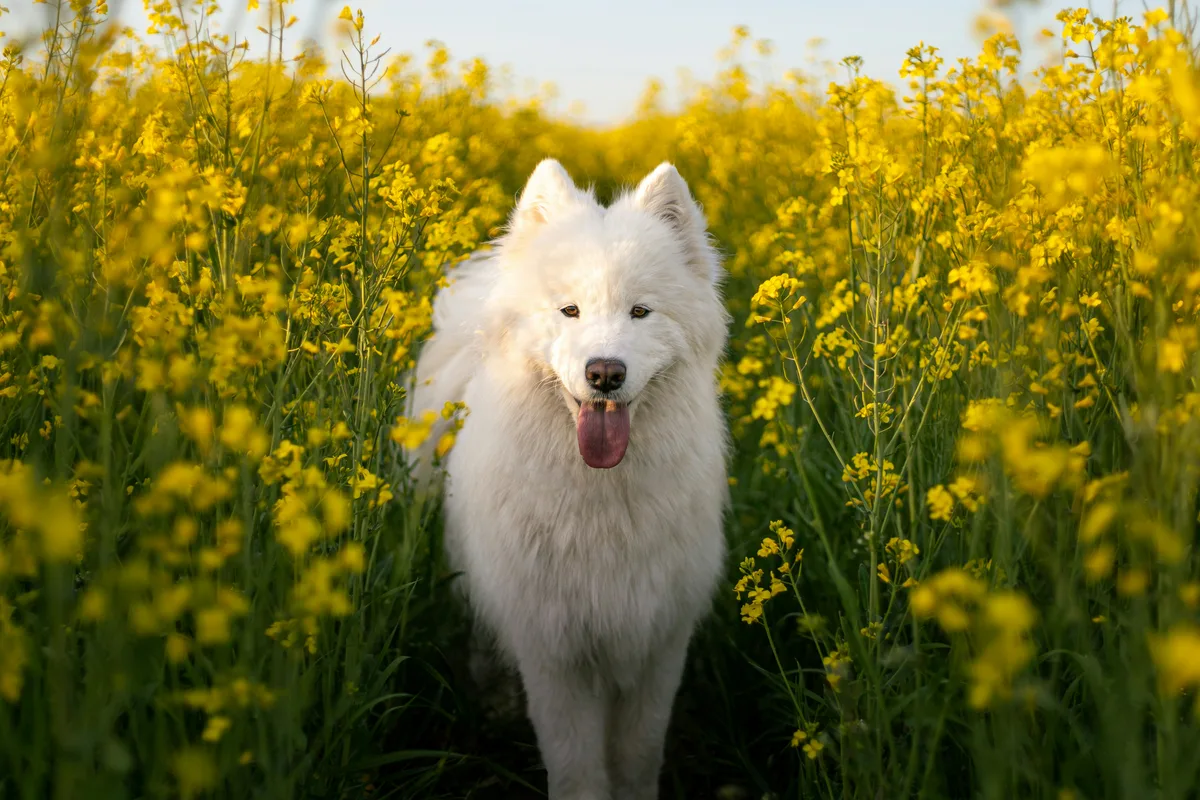
사모예드 성견 가이드
사모예드 성견 사료 가이드
18개월~7세 사모예드. 고단백 사료, SHN 신장 보호, 오메가3·아연 코트 관리, 고관절 글루코사민 전략을 전문 자료 기반으로 정리했습니다.
AAFCO 성견 기준WSAVA 영양 가이드라인NRC 2006 기준
이 페이지의 목차
01
이 시기의 특성
성견기 (10개월~7세)
- 최고 활동량 시기 — 충분한 야외 운동(하루 1.5~2시간)을 제공해야 행동 문제를 예방할 수 있습니다
- SHN 진행 모니터링 시기 — 유전성 신병증은 성견기부터 서서히 진행될 수 있으며, 정기 신장 검진이 필요합니다
- 흰색 이중 코트 관리 — 계절성 대량 환모와 피부 건강을 위한 오메가3·아연 함유 사료가 효과적입니다
- 고관절·심장 이상 조기 발견 시기 — 운동 기피, 호흡 곤란 증상을 주의 깊게 관찰하세요
02
핵심 영양 포인트
- 고단백 사료(DM 기준 25% 이상) 권장 — 사모예드는 썰매견 계열의 고활동량 견종입니다. 충분한 단백질이 근육량 유지와 에너지 공급에 필수적입니다
- 오메가3(EPA+DHA) + 아연 포함 — 사모예드 특유의 흰색 이중 코트 유지에 직접 기여합니다. 환모 시즌 코트 품질과 피부 건강에 영향을 줍니다
- 글루코사민·콘드로이틴 포함 — 사모예드는 고관절 이형성 유전 소인이 있습니다. 성견기부터 관절 보호 성분을 선제적으로 공급하는 것이 권장됩니다
- 인 함량 적정 수준 사료 선택 — SHN(사모예드 유전성 신병증) 유전 위험군은 인 과잉 사료를 피해 신장 부담을 관리해야 합니다
- 하루 2회 분할 급여 — 대형견 특성상 과식 후 운동은 피하고 식후 1시간 안정을 유지하세요
- 중성화 후 칼로리 10~15% 감량 — 중성화로 기초대사량이 감소합니다. 비만 관리가 관절·심장 건강과 직결됩니다
03
체중별 급여량·칼로리 표
성견의 하루 에너지 요구량(RER × 1.6 기준). 중성화 여부·활동량에 따라 ±20% 조정하세요.
| 체중 | 하루 권장 칼로리 | 비고 |
|---|---|---|
| 16kg | 약 620~740 kcal | 암컷 소형 기준 (RER×1.4~1.6) |
| 20kg | 약 740~880 kcal | 암컷 평균 기준 (RER×1.4~1.6) |
| 25kg | 약 880~1,050 kcal | 수컷 평균 기준 (RER×1.4~1.6) |
| 30kg | 약 1,010~1,210 kcal | 수컷 대형 기준 (RER×1.4~1.6) |
⚠ 위 수치는 참고용입니다. 사료마다 칼로리가 다르므로 반드시 포장지 급여 기준표를 우선 확인하세요.
💡 체중이 이상 체중의 ±10% 이내로 유지되는지 월 1회 체크하세요. 살짝 과체중인 경우 간식 칼로리부터 줄이세요.
04
건강 관리 체크리스트
- 월 1회 체중·체형 점검 — 늑골이 손으로 눌러 쉽게 만져지는지 확인. 사모예드는 두꺼운 털로 인해 체형 판단이 어려울 수 있습니다
- 고관절 이형성 조기 발견 — 뒷다리 절뚝임, 일어서기 어려움, 운동 기피 증상이 보이면 수의사 X-ray 검진을 받으세요
- SHN 정기 신장 검진 — 사모예드 특유 유전 질환입니다. 성견기부터 연 1~2회 신장 기능 혈액 검사가 권장됩니다
- 흰 코트 눈물자국 관리 — 오메가3 함유 사료가 도움이 되지만, 눈물자국이 심하면 안과적 원인(첩모난생, 결막염 등) 확인이 필요합니다
- 갑상선 기능 저하 모니터링 — 사모예드는 갑상선 기능 저하 소인이 있습니다. 체중 증가·무기력·털 상태 악화 증상 시 호르몬 검사를 받으세요
- 심장 건강 체크 — 사모예드는 심방 중격 결손(ASD), 폐동맥 협착(PS) 소인이 있습니다. 운동 후 호흡 곤란·기침 시 심장 검진을 권장합니다
05
사료 선택 기준
특정 브랜드 추천 대신, 사모예드 성견에게 잘 맞는 사료 타입 기준을 정리했습니다.
- 단일 동물성 단백질(닭고기·연어·칠면조) 첫 번째 원료 — DM 기준 25% 이상
- 오메가3(EPA+DHA) + 아연 포함 — 흰색 이중 코트 관리
- 글루코사민·콘드로이틴 포함 — 고관절 이형성 선제 대응
- 인 함량 적정 — 과잉 제품 배제 (SHN 유전 위험군)
- 합성 보존제(BHA·BHT·에톡시퀸) 미함유
- 대형견 적합 알갱이 크기
자주 묻는 질문
사모예드 흰 털이 환모 시즌에 심하게 빠지는데 사료로 개선할 수 있나요? +
어느 정도 도움이 됩니다. 오메가3(EPA+DHA)와 아연이 풍부한 사료는 피모 건강과 털 품질에 긍정적 영향을 줍니다. 그러나 사모예드의 이중 코트 환모는 계절성 정상 반응으로, 사료만으로 완전히 줄이기는 어렵습니다. 규칙적인 빗질과 목욕이 병행되어야 합니다.
SHN(사모예드 유전성 신병증)이 있는 개에게 특별한 사료가 필요한가요? +
SHN 확진 시 수의사 처방식(신장식)으로 전환이 필요합니다. 일반적으로는 인 함량이 과잉이지 않은 사료를 선택하고, 연 1~2회 신장 기능 혈액 검사로 모니터링하는 것이 권장됩니다. 임의로 저단백 처방식을 급여하는 것은 근육 손실로 이어질 수 있으므로 수의사 지시를 따르세요.
사모예드 성견 사료를 고단백으로 먹이면 신장에 무리가 되지 않나요? +
건강한 성견에서 고단백 사료가 신장에 직접 손상을 주는 것은 아닙니다(WSAVA, 2013). 다만 SHN 유전 소인이 있는 사모예드는 단백질 품질이 높은 고소화율 사료를 선택해 신장 부담을 최소화하는 것이 현명합니다. 신장 이상이 확인된 경우에는 수의사 처방을 받으세요.
사모예드 성견의 적정 체중 관리법은? +
수컷 20~30kg, 암컷 16~20kg이 표준 체중입니다. 두꺼운 흰 털로 인해 체형 판단이 어려우므로 늑골 촉진으로 확인하세요. 쉽게 만져지면 적정, 딱딱하게 만져지면 저체중, 찾기 어려우면 과체중입니다. 중성화 후 칼로리 10~15% 감량이 기본입니다.
사모예드 성견에게 고활동량 전용 사료가 필요한가요? +
실제 운동량에 따라 다릅니다. 하루 2시간 이상 충분한 운동이 제공된다면 단백질 25~30% 이상의 고활동 설계 사료가 적합합니다. 실내 위주 생활이라면 일반 성견 사료(단백질 22~26%)로 충분하며, 과도한 고단백 칼로리 급여는 오히려 비만 위험이 있습니다.
사모예드 성견 추천 사료 — 더블코트·관절·피부 케어
아래 제품은 참고용 예시입니다. 반드시 우리 아이 상태와 수의사 의견을 우선하세요.
ℹ 이 페이지는 쿠팡 파트너스 활동의 일환으로, 이에 따른 일정액의 수수료를 제공받습니다.
다른 연령대 가이드
관련 가이드
⚠️ 이 페이지의 정보는 일반적인 교육 목적입니다. 건강 문제가 있는 경우 수의사와 상담하세요.