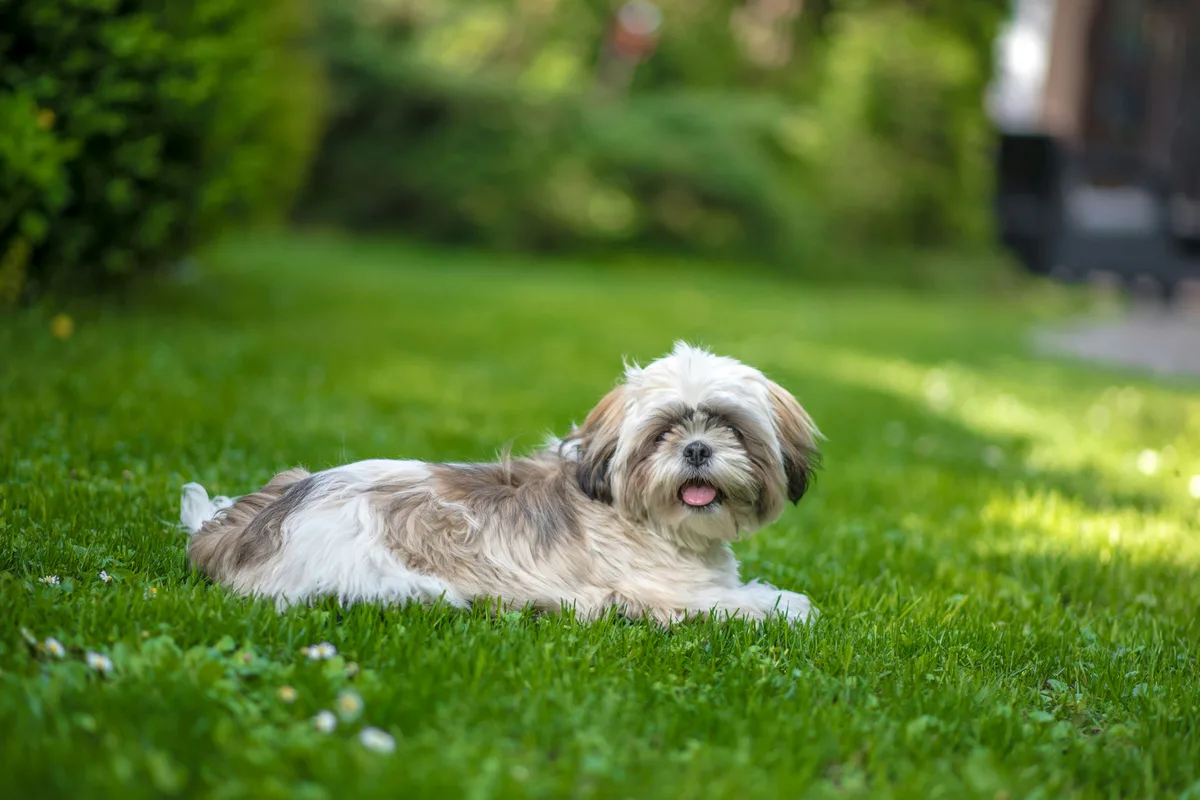
Shih Tzu adult food guide — brachycephalic obesity, skin allergy, and urinary stone management

petsShih Tzu Adult Guide

Shih Tzu Adult Food Guide

A science-backed guide for adult Shih Tzus (1–7 years) — brachycephalic obesity prevention through indoor low-calorie formulas, LID skin allergy management, and urinary stone prevention through hydration.

Lund 2006 ObesityMueller 2016 LIDHand 2010 Hydration

Table of Contents

  1. 01infoThis Life Stagearrow_forward
  2. 02nutritionCore Nutrition Pointsarrow_forward
  3. 03calculateDaily Calorie & Feeding Guidearrow_forward
  4. 04health_and_safetyHealth Management Checklistarrow_forward
  5. 05checklistWhat to Look for in Foodarrow_forward
01

This Life Stage

Adult Stage (1–7 years)

  • checkPeak obesity risk — the combination of reduced metabolic rate after neutering/spaying and low indoor activity makes overweight a constant risk. Overweight → fat around the airway → worsened brachycephalic breathing: this is a direct chain.
  • checkSkin allergy and tear staining emerge — dietary hypersensitivity manifests as skin itching, redness, and increased tear secretion during this period. LID trials and omega-3 management are the key dietary tools.
  • checkUrinary stone accumulation — calcium oxalate stones form when urine is persistently concentrated. Water intake management must be sustained for 10+ years.
  • checkPeriodontal disease progression — Niemiec (2013): over 80% of small dogs have periodontal disease onset before age 3. The friction effect of 8–10 mm dry kibble, daily brushing, and regular dental scaling are all essential.

3 Core Management Points for Adults

① Brachycephalic obesity → indoor low-calorie food + 15–20% calorie reduction after neutering + slow-feeder bowl

② Skin allergy & tear stains → single-protein LID + omega-3 + no artificial colors

③ Urinary stones → 20–30% wet food + multiple water bowls + low-phosphorus food

02

Core Nutrition Points

  • checkIndoor or low-calorie small breed adult formula — Shih Tzus need RER × 1.0–1.2. Lund et al. (2006): obesity rates are especially high in indoor small breeds, and obesity directly worsens brachycephalic breathing.
  • checkBrachycephalic-appropriate kibble (8–10 mm) — sized for a flat muzzle to chew properly. Oversized kibble gets swallowed whole, causing regurgitation and leaving tartar undisturbed.
  • checkSingle animal protein (chicken, salmon, or duck) as the first ingredient — enables easy identification of allergy triggers. Mueller et al. (2016): limited ingredient diet (LID) trials are the gold standard for diagnosing food allergies.
  • checkOmega-3 (EPA+DHA) stated on label — simultaneously strengthens the skin barrier, supports tear film stability, and suppresses joint inflammation. Mueller et al. (2016): omega-3 supplementation strengthens skin barrier function and reduces allergy symptoms.
  • check20–30% wet food mixed in — increases water intake for urinary stone prevention. Hand et al. (2010): urine dilution is the most effective method for preventing urinary stones.
  • checkNo artificial colors, BHA, or BHT — artificial colors can increase tear secretion and worsen tear staining. Choose products with natural preservatives (mixed tocopherols).
  • checkReduce calories by 15–20% after neutering/spaying — obesity increases fat tissue around the airway, directly worsening brachycephalic breathing.
03

Daily Calorie & Feeding Guide

RER (resting energy requirement) = 70 × body weight(kg)^0.75. Because Shih Tzus are low-activity indoor dogs, RER × 1.0–1.1 is appropriate. Apply 1.2–1.4 for more active or intact dogs.

WeightDaily Calories (neutered adult)Notes
4 kg~198–218 kcal/dayRER(198) × 1.0–1.1 — neutered indoor adult
5 kg~234–258 kcal/dayRER(234) × 1.0–1.1
6 kg~268–295 kcal/dayRER(268) × 1.0–1.1
7.5 kg~319–351 kcal/dayRER(319) × 1.0–1.1
warningThese figures are estimates. Always check the feeding guide on the food packaging first — calorie content varies by brand. Include calories from treats and supplements in the total.
lightbulbNormal weight: ribs should be easily felt with light pressure. Weigh monthly and record the result — if you see an upward trend two weeks in a row, reduce the daily amount by 5–10% immediately.
04

Health Management Checklist

Brachycephalic Syndrome & Obesity — Weight Determines Breathing

  • checkThe Shih Tzu's flat nasal structure means a naturally narrow airway and low breathing efficiency. When obese, fat tissue around the airway compresses it further — worsening exercise intolerance, heat sensitivity, and sleep apnea.
  • checkLund et al. (2006): obesity rates are especially high in indoor small breeds. An indoor low-calorie formula + 15–20% calorie reduction after neutering + slow-feeder bowl + 30-minute post-meal rest is the core management set.
  • check8–10 mm dry kibble simultaneously provides tartar friction, appropriate sizing for a flat muzzle, and prevention of swallowing accidents.

Skin Allergy & Tear Stains — LID and Omega-3

  • checkHillier & Griffin (2001): food hypersensitivity causes skin itching, redness, and eye membrane irritation — more pronounced in sensitive-skinned breeds like the Shih Tzu.
  • checkMueller et al. (2016): the standard for diagnosing food allergies is an 8–12 week LID trial. Use only a single novel protein (duck, salmon, or rabbit) the dog has never eaten before — for both food and treats.
  • checkOmega-3 (EPA+DHA) simultaneously strengthens the skin barrier, stabilizes the tear film, and suppresses joint inflammation. Choose a product with no artificial colors, BHA, or BHT.

Urinary Stones — Hydration Is the Most Powerful Prevention

  • checkShih Tzus have a higher-than-average risk of calcium oxalate urinary stones. Urinary obstruction from stones can be life-threatening.
  • checkHand et al. (2010): urine dilution is the most effective preventive measure. Mix 20–30% wet food, add water to dry kibble, and place water bowls in several locations around the home.
  • checkChoose a food with low phosphorus content. If there is a history of stones, consult a vet about a urinary care prescription diet. Blood in urine, frequent urination, or straining to urinate — seek veterinary care immediately.
05

What to Look for in Food

Rather than recommending specific brands, here are the food criteria that tend to work best for adult Shih Tzus.

  • checkIndoor or low-calorie small breed adult formula — first step in obesity prevention
  • checkBrachycephalic-appropriate kibble (8–10 mm) — proper sizing for a flat muzzle + tartar friction
  • checkSingle animal protein (chicken, salmon, or duck) as the first ingredient — enables allergy identification
  • checkOmega-3 (EPA+DHA) stated on label — skin barrier, tear film, and joint management in one
  • checkWet food mixable — hydration for urinary stone prevention
  • checkAppropriate phosphorus level — mineral management for urinary stone prevention
  • checkNo artificial colors, BHA, or BHT — minimize tear staining and skin reactions
  • checkProbiotics included — gut health and skin immune support

Frequently Asked Questions

Q. Does my adult Shih Tzu really need a low-calorie food?

Yes. Shih Tzus are very low-activity indoor dogs, so a standard small breed adult formula easily leads to weight gain. Excess weight increases fat around the airway, directly worsening brachycephalic breathing problems. Choose an indoor formula or one with RER × 1.0–1.2 calorie levels, and check monthly that the ribs are easily felt.

Q. My Shih Tzu has suspected skin allergies — what should I do?

If a food allergy is suspected, conduct an 8–12 week LID (limited ingredient diet) trial using a single novel protein (duck, salmon, or rabbit) the dog has never eaten before, plus a single carbohydrate. Mueller et al. (2016): the LID trial is the gold standard for diagnosing food allergies. During the trial, restrict all treats and supplements to single-ingredient items too. Note that environmental allergies (dust mites, pollen) produce similar symptoms, so a vet evaluation should come first.

Q. Can food help prevent urinary stones in a Shih Tzu?

Adequate water intake is the most effective preventive measure. Hand et al. (2010): urine dilution inhibits calcium oxalate stone formation. Mix 20–30% wet food or add water to dry kibble, and place water bowls in several locations around the home. Choose a food with low phosphorus content. If there is a history of stones, consult your vet about a urinary care prescription diet.

Q. Can dietary changes help with Shih Tzu tear staining?

Dietary reactions to artificial colors or certain protein sources can increase tear production and worsen staining. Switching to a single-protein food without artificial colors and observing for 4–8 weeks may help. Omega-3 (EPA+DHA) also supports tear film stability. That said, structural causes (nasolacrimal duct stenosis, prominent eyes) are more common — a vet evaluation should come first.

Q. Is there a special feeding method for a brachycephalic Shih Tzu?

Yes. ① Use a slow-feeder bowl to reduce eating speed — fast eating causes excess air swallowing, leading to regurgitation, vomiting, and bloating. ② Restrict vigorous activity for 30 minutes after meals — a full stomach pressing on the diaphragm makes breathing harder. ③ Split the daily amount into 2–3 smaller meals to limit portion size at each sitting.

Related Guides

warningThe information on this page is for general educational purposes only and does not substitute for veterinary diagnosis or prescription. If your dog has a health condition or special dietary needs, consult a licensed veterinarian before making dietary changes.