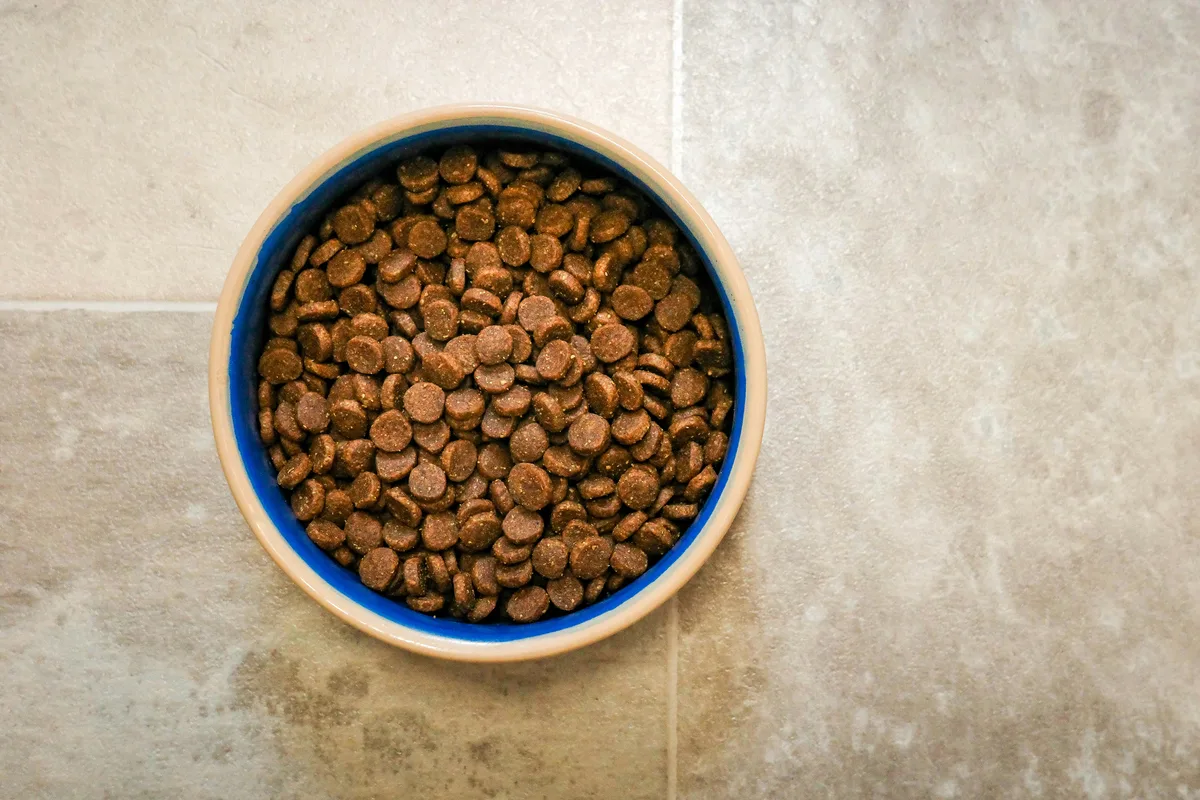
Dog food macronutrients — protein, fat, and carbohydrates science guide

nutritionNutrition Basics

Dog Food Macronutrients: A Complete Science-Based Guide

Protein, fat, and carbohydrates explained using AAFCO, FEDIAF, and NRC standards — so you can evaluate any dog food label with confidence.

AAFCO 2023FEDIAF 2025NRC 2006

Table of Contents

What This Guide Covers

  1. 01fitness_centerProtein — Building Block of Muscle, Enzymes & Immunityarrow_forward
  2. 02opacityFat — Energy, Hormones & Fat-Soluble Vitamin Absorptionarrow_forward
  3. 03grainCarbohydrates — An Energy Source, But Not Essentialarrow_forward
  4. 04calculateWhy You Must Compare on a Dry Matter (DM) Basisarrow_forward
  5. 05fact_checkCommon Myths — Fact-Checkedarrow_forward
01

Protein — Building Block of Muscle, Enzymes & Immunity

Protein is the primary structural component of a dog's muscles, skin, coat, enzymes, antibodies, and hormones. It is broken down into amino acids during digestion. Dogs require 10 essential amino acids — arginine, histidine, isoleucine, leucine, lysine, methionine, phenylalanine, threonine, tryptophan, and valine — that must be supplied through diet.[1,2]

warning

Taurine & Dilated Cardiomyopathy (DCM) — Latest Research

Since 2018, the FDA has investigated a link between legume-heavy grain-free diets (peas, lentils, potatoes) and DCM in dogs. Early hypotheses centered on taurine deficiency, but Freeman et al. (2022) found that most affected dogs had normal or elevated taurine levels. Current research focuses on how legumes may affect bile acid metabolism and gut microbiota. Taurine-deficient DCM appears to have elevated susceptibility in breeds such as Golden Retrievers. If feeding a grain-free diet long-term, periodic cardiac screening is advisable.[3]

Life StageAAFCO Minimum (DM)FEDIAF Minimum (DM)Practical Recommendation
Adult Maintenance18.0%18.0%22–28%
Growth (Puppy)22.5%25% (<14 wks) / 20% (≥14 wks)28–32%
Pregnancy & Lactation22.5%25%28%+

Source: AAFCO Official Publication 2023[1], FEDIAF Nutritional Guidelines 2025[2]

Protein Source Digestibility Comparison

Protein SourceDigestibility (Reference)Notes
Chicken / Turkey85–90%Well-balanced essential amino acids; cost-accessible
Fish (Salmon, Herring)88–92%Delivers EPA & DHA; anti-inflammatory
Beef / Lamb80–87%Rich in iron & zinc; higher allergenicity
Egg~100%Reference protein by biological value (BV)
Soy70–80%Incomplete amino acid profile; phytic acid inhibits absorption
Peas / Lentils65–75%Possible taurine interference — under active research
Wheat55–65%Low digestibility; common allergen

Reference: NRC (2006)[4], Case et al. (2011)[5] — actual values vary by processing method

What to Check on the Label

  • checkThe first ingredient should be a named animal protein — chicken, salmon, beef, etc.
  • checkNamed cuts (chicken breast, salmon meal) are more traceable than generic by-products
  • checkHigh crude protein % means little if the protein source has low digestibility
  • checkGrain-free diets: check whether legumes dominate; consider cardiac monitoring for long-term feeding
02

Fat — Energy, Hormones & Fat-Soluble Vitamin Absorption

Fat provides 8.5 kcal/g — more than double the energy density of protein or carbohydrates (3.5 kcal/g each). It is essential for absorbing fat-soluble vitamins A, D, E, and K, and plays a critical role in cell membrane integrity, skin barrier function, neurological development, and reproduction. Two fatty acids — linoleic acid (LA) and alpha-linolenic acid (ALA) — cannot be synthesized by dogs and must be supplied in food.[1,2,4]

Fatty AcidFamilyKey FunctionPrimary SourceAAFCO Minimum (DM)
Linoleic Acid (LA)Omega-6Skin barrier, reproduction, inflammation precursorChicken fat, sunflower oil, corn oil1.1% DM (adult) / 1.3% DM (puppy)
Alpha-Linolenic Acid (ALA)Omega-3Precursor to EPA/DHA (conversion is inefficient)Flaxseed oil, chia seedsNo minimum set
EPAOmega-3Anti-inflammatory, cardiovascular protectionFish oil (mackerel, sardine, salmon)No minimum set
DHAOmega-3Brain & retinal development, cognitionFish oil, algal oilEPA+DHA combined 0.05% DM (puppy)
Arachidonic Acid (AA)Omega-6Inflammatory signaling, reproductionAnimal fat (liver, kidney)ND (not determined); NRC RA: 0.08 g/1000 kcal (puppy)

Source: AAFCO 2023[1], FEDIAF 2025[2], Bauer (2011)[6]

water_drop

Omega-6 : Omega-3 Ratio

AAFCO sets a maximum omega-6:omega-3 ratio of 30:1, while NRC recommends a range of 2.6:1–26:1.[1,4] Most commercial kibble formulated around chicken and corn can reach 15:1–30:1. Because dogs convert ALA to EPA/DHA very inefficiently[6], look for diets that include a direct source of preformed EPA and DHA — typically fish oil or algal oil — rather than relying on flaxseed alone.

Life StageAAFCO Minimum (DM)FEDIAF Minimum (DM)Excess Risk
Adult Maintenance5.5%5.0%>20% DM increases obesity & pancreatitis risk
Growth (Puppy)8.5%8.5%
Pregnancy & Lactation8.5%8.5%Upper limit relaxed due to elevated caloric demand

Source: AAFCO 2023[1], FEDIAF 2025[2]

Fat Quality Checklist

  • checkLook for named fat sources — chicken fat, salmon oil — not generic animal fat
  • checkCheck for antioxidants (mixed tocopherols, rosemary extract) — polyunsaturated fats are prone to rancidity
  • checkVerify a preformed EPA/DHA source (fish oil, algal oil) in the ingredient list
  • checkFor low-activity adult dogs: monitor fat content vs. activity level to avoid weight gain
03

Carbohydrates — An Energy Source, But Not Essential

Dogs can maintain blood glucose through gluconeogenesis using protein and fat — which is why neither AAFCO nor FEDIAF sets a minimum carbohydrate requirement.[1,2,4] In practice, however, most dry kibble contains 30–60% carbohydrates on a dry matter basis, primarily as a structural and cost-effective energy source.

TypeCommon SourcesNotes
Complex CarbohydratesRice, oatmeal, barley, sweet potatoHigh digestibility (85–95%), stable blood sugar, provides fiber
Refined CarbohydratesCorn syrup, refined flourRapid glycemic spike, low nutrient density — minimize
Legumes (grain-free)Peas, lentils, chickpeasContain protein & starch; possible taurine interference
Soluble FiberFOS, inulinPrebiotic: feeds beneficial gut bacteria, supports immunity
Insoluble FiberSugarcane pulp, flaxseedAdds fecal bulk, stimulates gut motility

Reference: NRC 2006[4], Case et al. 2011[5]

biotech

Grain-Free Does Not Mean Low-Carb

Many grain-free diets substitute grains with peas, potatoes, or tapioca — resulting in carbohydrate levels similar to or exceeding grain-inclusive diets. The FDA began investigating a potential link between legume-heavy grain-free diets and DCM in 2018. Freeman et al. (2018)[3] documented clinical cases and noted elevated DCM rates in Golden Retrievers and other large breeds fed these diets. Causation has not been fully established, but caution is warranted for high-risk breeds.

lightbulb

The WSAVA Global Nutrition Guidelines recommend a total dietary fiber level of 3–5% DM for healthy adult dogs.[7] Dogs with diabetes or obesity may benefit from diets higher in soluble fiber (FOS, psyllium) under veterinary supervision.

04

Why You Must Compare on a Dry Matter (DM) Basis

Dry kibble contains roughly 10% moisture; canned wet food contains roughly 78%. Comparing as-fed nutrient percentages directly leads to misleading conclusions — you must remove water from the equation to compare true nutrient density.

straighten

DM% = As-Fed% ÷ (1 − Moisture%) × 100

Example 1 (wet food): Protein 8%, moisture 78% → DM = 8 ÷ 0.22 × 100 = 36.4%

Example 2 (dry food): Protein 26%, moisture 10% → DM = 26 ÷ 0.90 × 100 = 28.9%

→ That wet food labeled 8% protein is actually denser in protein than a dry food showing 26%.

Food TypeTypical MoistureDM Conversion Factor (×)
Dry Kibble~10%× 1.11
Semi-Moist~35%× 1.54
Canned / Wet~78%× 4.55
Raw / Frozen~65–70%× 3.33
05

Common Myths — Fact-Checked

Myth: High-protein diets damage healthy kidneys

Fact: There is no clinical evidence that high dietary protein causes kidney disease in dogs with healthy renal function. Protein restriction is indicated only in dogs with existing chronic kidney disease (CKD), and should be managed under veterinary supervision. [4,5]

Myth: Grain-free is healthier

Fact: True grain allergy is rare in dogs — the most common food allergens are beef, dairy, and chicken. Removing grain provides no inherent health benefit and may introduce DCM risk when legumes dominate the formula. [3,8]

Myth: Less fat is always better

Fact: Fat is an essential nutrient. Low-fat diets can impair skin and coat health, reduce fat-soluble vitamin absorption, and affect neurological function. For overweight dogs, reducing carbohydrates is usually more appropriate than cutting fat. [1,4]

Myth: Ingredients are not listed by weight

Fact: AAFCO requires ingredients to be listed in descending order by pre-processing weight (as-fed basis). Be aware of the meat-washing effect: fresh meats are heavy due to water content and may rank high on the list even when their actual dry-matter contribution is small. [1]

References

  1. [1]Association of American Feed Control Officials (AAFCO). (2023). Official Publication: Dog and Cat Food Nutrient Profiles. AAFCO.
  2. [2]FEDIAF (European Pet Food Industry Federation). (2025). Nutritional Guidelines for Complete and Complementary Pet Food for Cats and Dogs. FEDIAF.
  3. [3]Freeman, L. M., Stern, J. A., Fries, R., Adin, D. B., & Rush, J. E. (2018). Diet-associated dilated cardiomyopathy in dogs: what do we know? Journal of the American Veterinary Medical Association, 253(11), 1390–1394.
  4. [4]National Research Council (NRC). (2006). Nutrient Requirements of Dogs and Cats. National Academies Press, Washington, DC.
  5. [5]Case, L. P., Daristotle, L., Hayek, M. G., & Raasch, M. F. (2011). Canine and Feline Nutrition: A Resource for Companion Animal Professionals (3rd ed.). Mosby/Elsevier.
  6. [6]Bauer, J. E. (2011). Therapeutic use of fish oils in companion animals. Journal of the American Veterinary Medical Association, 239(11), 1441–1451.
  7. [7]WSAVA Global Nutrition Committee. (2011). Nutritional Assessment Guidelines. Journal of Small Animal Practice, 52(7), 385–396.
  8. [8]Verlinden, A., Hesta, M., Millet, S., & Janssens, G. P. J. (2006). Food allergy in dogs and cats: a review. Critical Reviews in Food Science and Nutrition, 46(3), 259–273.

Related Guides