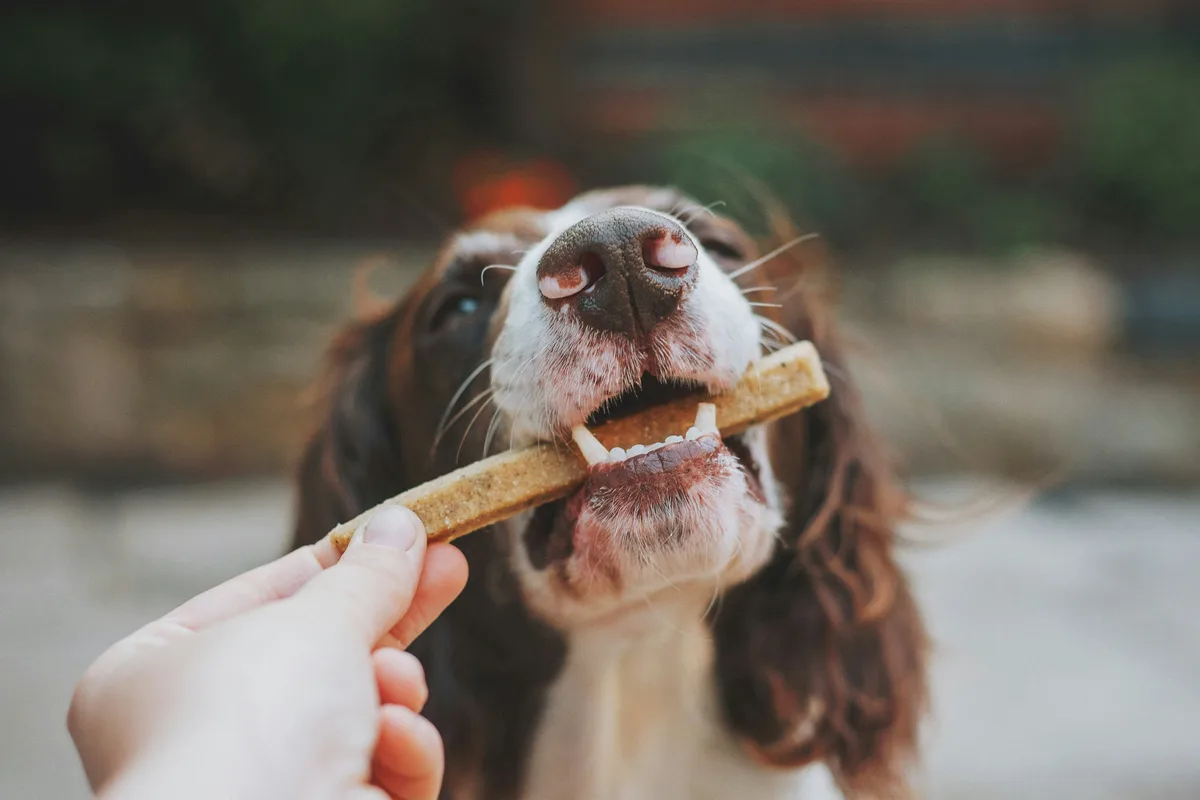
눈·입 건강 가이드
포르피린 색소, 치주 질환, 구강 외 원인으로 나뉘는 눈·입 건강 문제를 전문 자료 기반으로 안내합니다.
핵심 요약
- 3세 이상 개의 80%+ 치주 질환 — 방치 시 심장·신장 세균 전파 구취 개선의 핵심은 사료보다 매일 양치 + 정기 스케일링
- 눈물 자국 = 포르피린 색소 산화 — 인공 첨가물 적은 사료로 일부 개선 구조적 원인(비루관 막힘) 있으면 사료 변경만으론 한계
- 아세톤 냄새 구취 → 당뇨성 케톤산증, 암모니아 냄새 → 요독증 응급 이 두 경우는 즉시 수의사 진찰 필요
- 덴탈 사료·간식은 VOHC 인증 여부 확인 물리적 마찰로 치석 형성 억제 효과
눈물 자국과 구취, 사료로 얼마나 개선될까?
눈물 자국은 눈물에 포함된 포르피린 색소가 공기·빛에 산화되어 생기는 적갈색 착색입니다. 철분 과잉·인공 색소·일부 방부제가 포르피린 생성을 자극한다는 보고가 있어 인공 첨가물이 적은 사료로 전환하면 일부 개선되는 경우가 있습니다. 단, 비루관 협착이나 내안검증 같은 구조적 원인이 동반된 경우에는 사료 변경만으로는 한계가 있으며 수의사 치료가 선행되어야 합니다.
구취는 3세 이상 개의 80% 이상에서 발생하는 치주 질환이 압도적 1위 원인입니다. 치석 아래 혐기성 세균이 황화수소와 같은 악취 물질을 생성하며, 방치하면 치조골 손실을 넘어 심장·신장으로 세균이 전파될 수 있습니다. 구취 개선의 핵심은 사료 변경보다 매일 양치와 정기적인 수의사 스케일링입니다. VOHC 인증 덴탈 사료·간식은 보조적으로 도움이 됩니다.
구취가 달콤한 아세톤 냄새라면 당뇨성 케톤산증, 암모니아·소변 냄새라면 신장 기능 저하(요독증) 신호일 수 있습니다. 이 두 경우는 식이 조절이 아니라 즉각적인 수의사 진찰이 필요합니다.
80%+
3세 이상 개 치주 질환 발생률
포르피린
눈물 자국 착색의 핵심 색소
VOHC
수의 구강 위생 위원회 인증 기준
눈·입 건강 문제의 3대 원인
치주 질환은 3세 이상 개의 80% 이상에서 발생하는 가장 과소평가된 건강 위협입니다. 방치된 치주 질환은 심장·신장으로 세균이 전파될 수 있습니다.
포르피린 과잉 분비 (눈물 자국의 핵심 메커니즘)
포르피린
공기·빛 산화로 적갈색 착색 유발
- ·눈 아래 적갈색 착색은 눈물에 포함된 포르피린(porphyrin) 색소가 공기·빛에 산화되면서 생성됩니다. 포르피린은 적혈구 헤모글로빈 분해 과정에서 생성되는 정상 대사 산물입니다.
- ·포르피린 분비량은 염증, 면역 반응, 스트레스, 식이 성분에 의해 증가할 수 있습니다. 특정 음식 성분(철분 과잉, 인공 색소, 일부 방부제)이 포르피린 생성을 자극한다는 보고가 있습니다.
- ·눈물 자국이 심한 견종: 비숑 프리제, 말티즈, 시추, 푸들 등 흰 털 소형 견종은 착색이 특히 눈에 띕니다. 구조적으로 비루관 협착이나 내안검증이 동반된 경우가 많습니다.
- ·식이 개선으로 증상을 줄일 수 있지만 구조적 원인(비루관 막힘, 내안검증)이 있다면 수의사 치료가 선행되어야 합니다.
치주 질환 (구취의 압도적 1위 원인)
80%+
3세 이상 개 치주 질환 발생률
- ·Niemiec(2013): 3세 이상 개의 80% 이상에서 치주 질환이 발생합니다. 방치 시 치조골 소실 → 치아 탈락 → 심장·신장으로 세균 전파로 이어집니다.
- ·구취 원인균인 혐기성 세균(Porphyromonas, Fusobacterium 등)은 치석 아래에서 번식하며 황화수소·메틸메르캅탄 등 악취 성분을 생성합니다.
- ·습식 사료나 부드러운 간식은 치아 표면에 잘 들러붙어 치석 형성을 가속합니다. VOHC 인증 덴탈 사료·간식은 물리적 마찰로 치석 제거에 도움이 됩니다.
- ·구취 개선의 핵심은 매일 양치, 정기 스케일링(수의사), 덴탈 사료·간식 병행입니다. 식이 조절만으로 중등도 이상 치주 질환을 역전시키기는 어렵습니다.
구강 외 원인 (신장·당뇨·소화기 문제)
응급
아세톤·암모니아 냄새는 즉시 수의사 진찰
- ·달콤한 과일·아세톤 냄새: 당뇨성 케톤산증(DKA) 가능성. 암모니아·소변 냄새: 신장 기능 저하(요독증) 가능성. 이 두 경우는 즉시 수의사 진찰이 필요합니다.
- ·소화기 문제(역류성 식도염, 위장 내 이상 발효)도 구취를 유발합니다. 식후 트림이 잦고 구취가 함께 나타나면 소화기 검진이 필요합니다.
- ·어류 원료 비율이 높은 사료는 생선 냄새를 유발할 수 있으나 이는 구강 질환과 무관합니다. 단백질 소화가 불완전할 때 장내 이상 발효로 구취가 악화될 수 있습니다.
- ·치주 질환이 없는데도 구취가 심하면 혈액 검사(BUN, 크레아티닌, 혈당)를 통해 신장·당뇨 여부를 확인하세요.
세부 가이드 바로가기
증상으로 원인 찾기
아래 응급 신호에 해당하는 경우 즉시 수의사 진찰이 필요합니다.
| 증상 | 의심 원인 | 관련 가이드 |
|---|---|---|
| 눈 아래 적갈색 착색 (특히 흰 털) | 포르피린 색소 + 식이 성분 가능성 | 눈물 자국 가이드 → |
| 눈물 과다 + 눈곱, 충혈 | 안구 질환(결막염·각막염) 가능성 | 즉시 수의사 진찰 필요 |
| 일반적인 입 냄새, 황변 치석 | 치주 질환 (치석·치태 축적) | 구취 가이드 → |
| 달콤한(아세톤) 냄새 | 당뇨성 케톤산증(DKA) 가능성 | 즉시 수의사 진찰 필요 |
| 암모니아·소변 냄새 | 신장 기능 저하(요독증) 가능성 | 즉시 수의사 진찰 필요 |
눈·입 건강 추천 사료
참고 문헌
- [1]Niemiec, B.A. (2013). Periodontal disease. Top Companion Anim Med, 23(2), 72–80.
- [2]Harvey, C.E. (2005). Management of periodontal disease. Vet Clin North Am Small Anim Pract, 35(4), 819–836.
- [3]VOHC. (2023). Veterinary Oral Health Council accepted products for dogs.