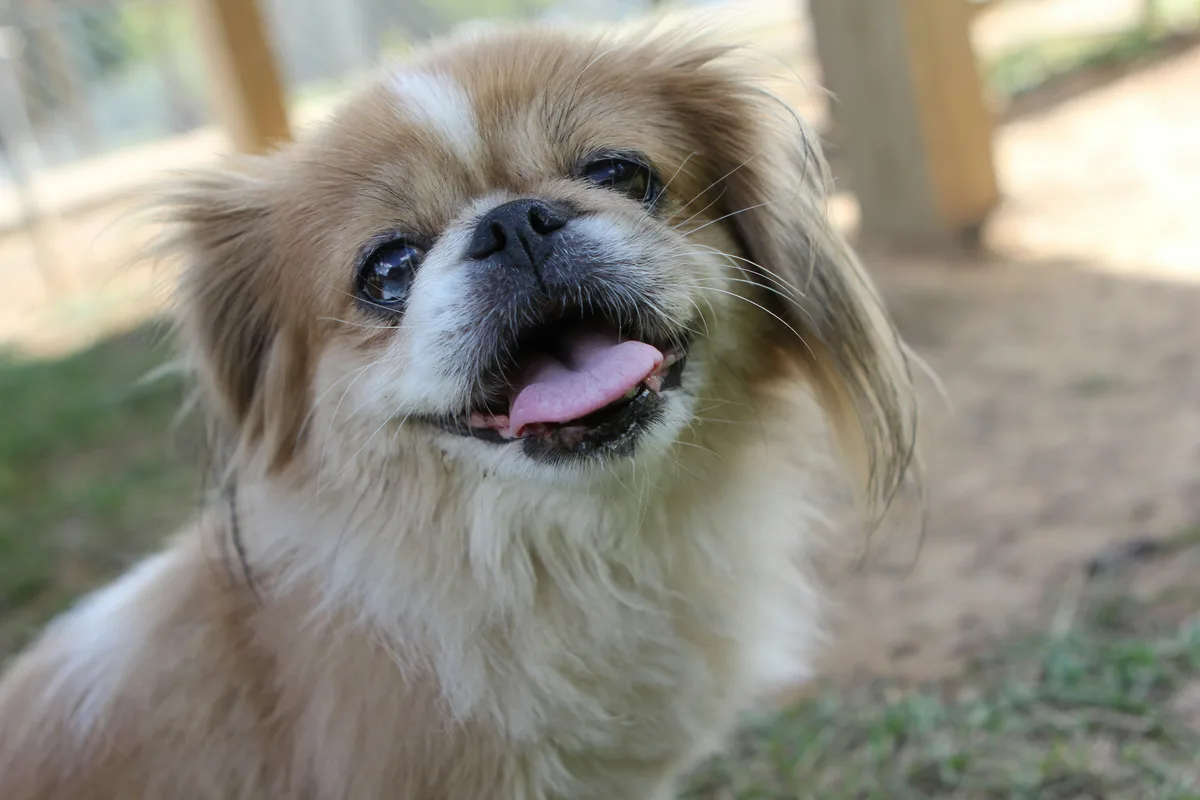
Pekingese — BOAS, obesity, and IVDD diet management guide

petsBreed Guide

Pekingese Food Guide

Among brachycephalic small breeds, the Pekingese has the lowest activity level. Small kibble, low calories, and joint support form the core of their diet.

BOAS — Small Kibble RequiredHigh Obesity & IVDD Risk

On This Page

  1. 01infoBreed Info & Key Health Issuesarrow_forward
  2. 02calendar_todayFeeding Points by Life Stagearrow_forward
  3. 03calculateCalorie & Portion Guide by Weightarrow_forward
  4. 04health_and_safetyBOAS, Obesity, IVDD & Eye Managementarrow_forward
  5. 05checklistFood Selection Checklistarrow_forward
01

Breed Info & Key Health Issues

Average Weight3–6 kg (small in both sexes)
Average Lifespan12–15 years
Coat TypeLong, abundant double coat — lion's mane ruff, requires regular brushing
Key Health IssuesBrachycephalic obstructive airway syndrome (BOAS), prominent eye / corneal exposure, IVDD, obesity, skin fold dermatitis
Activity LevelVery low — prefers indoor rest over exercise, heat-sensitive, very high obesity risk

warningKey Nutritional Warnings for Pekingese

BOAS — Use small kibble (6–8 mm) or wet food; elevate the bowl; allow rest after meals.

Obesity risk — Target roughly 80% of a standard small-breed's calorie allowance due to very low activity.

IVDD predisposition — Weight control is the primary spinal protection strategy; start glucosamine in early adulthood.

02

Feeding Points by Life Stage

Puppy (0–12 months)

  • checkChoose a small-breed puppy formula with ≥22% protein and DHA for eye and brain development.
  • checkSmall kibble (≤8 mm) or wet food — the flat muzzle makes swallowing large pieces a choking risk.
  • checkFeed 3–4 small meals per day to reduce esophageal strain and prevent overeating.
  • checkAvoid vigorous activity for 30 minutes after meals — aspiration risk is higher post-feeding.

Adult (1–8 years)

  • checkLow-calorie formula is essential — very low activity level makes even a standard small-breed food too calorie-dense.
  • checkContinue small kibble or wet food blending — brachycephalic anatomy is lifelong.
  • checkChoose food with glucosamine and chondroitin from early adulthood for IVDD prevention.
  • checkOmega-3 (EPA/DHA) helps reduce facial skin fold inflammation and supports eye health.
  • checkLook for DHA, taurine, lutein, and vitamin E in formulas — all support the prominent, exposed eye.

Senior (8+ years)

  • checkMaintain low-calorie intake; add joint and kidney support (glucosamine, reduced phosphorus).
  • checkIncrease wet food proportion — respiratory reserve diminishes further with age in brachycephalic dogs.
  • checkIf eye or tear secretion worsens, consider a hypoallergenic (hydrolyzed) protein formula.
  • checkSwitch to a senior formula with MCT oil, DHA, and vitamin E if cognitive decline signs appear.
03

Calorie & Portion Guide by Weight

WeightDaily Calorie TargetReference Portion (400 kcal/100 g)
3 kgapprox. 145–175 kcalapprox. 36–44 g
4 kgapprox. 180–220 kcalapprox. 45–55 g
5 kgapprox. 215–260 kcalapprox. 54–65 g
6 kgapprox. 245–295 kcalapprox. 61–74 g

Based on neutered adult at very low activity (NRC 2006 formula, activity factor 0.8). Reduce by 10–15% if BCS exceeds 4/9.

04

BOAS, Obesity, IVDD & Eye Management

BOAS — Small Kibble and Meal Posture

The narrow airway of brachycephalic dogs makes rapid swallowing dangerous. Use kibble under 8 mm or wet food, and keep the meal environment calm. Elevating the bowl 5–10 cm reduces the neck-down angle and lowers regurgitation risk. Avoid any vigorous activity for at least 30 minutes after eating (Roedler et al., 2013).

Obesity Management — Activity-Based Calorie Planning

Because aerobic exercise is limited by their airway and temperament, Pekingese accumulate excess calories easily. Target approximately 80% of the calorie recommendation for an equally sized active small breed. Weigh monthly and check BCS; adjust portion size if BCS reaches 4/9. Low-calorie formulas are preferable to simply reducing standard-food portions, as they maintain satiety better.

IVDD Prevention — Weight Control + Glucosamine

Chondrodystrophic genetics cause early disc degeneration in the Pekingese. Even modest weight gain significantly increases spinal load. Glucosamine (≥1,000 mg/10 kg/day) and chondroitin supplementation starting in early adulthood is widely recommended. Limit jumping on and off elevated surfaces — environmental modifications complement dietary management.

Eye Health — Nutrients for Prominent Eyes

Large, protruding eyes are prone to corneal ulcers and dryness (Packer et al., 2015). DHA stabilises the tear film lipid layer, taurine protects retinal cells, and lutein with vitamin E reduce oxidative damage in ocular tissue. Seek these in your food's ingredient panel, or add a small daily fish oil supplement. Corneal injuries require prompt veterinary attention — nutrition is supportive, not curative.

05

Food Selection Checklist

  • checkSmall kibble or wet food — prevents aspiration risk from the flat muzzle structure
  • checkLow-calorie formula — target roughly 80% of a typical small-breed's energy allowance
  • checkGlucosamine & chondroitin — IVDD prevention starting in early adulthood
  • checkOmega-3, DHA, taurine — reduces skin fold inflammation and supports eye health simultaneously
  • checkLow-irritant protein source — minimise allergen load to reduce skin fold infection frequency

Related Guides

자주 묻는 질문

Q. Why does a Pekingese need small kibble?

The Pekingese is a brachycephalic breed with a flat muzzle and short jaw, making it difficult to chew and safely swallow large pieces of kibble. Attempting to gulp large pieces raises the risk of airway aspiration, which can lead to aspiration pneumonia. Kibble under 6–8 mm in diameter, or wet food, is safest. Elevating the food bowl slightly so the dog does not have to tilt its head far forward also helps reduce regurgitation risk.

Q. Why are Pekingese so prone to obesity?

The Pekingese has one of the lowest daily energy requirements among small breeds. Their brachycephalic airway limits sustained aerobic exercise, and their temperament favours rest over activity. Feeding a standard small-breed food at the recommended amount commonly results in excess caloric intake. Monthly body condition scoring (BCS) is essential, and a low-calorie formula should be considered before BCS reaches 4/9 or higher.

Q. What is the connection between Pekingese and IVDD?

Pekingese carry chondrodystrophic genetics — the same trait found in Dachshunds and Basset Hounds — meaning their intervertebral discs degenerate earlier than in other breeds. Every extra kilogram of body weight adds meaningful stress to the spine. Weight control is therefore the single most important preventive measure for IVDD. Glucosamine and chondroitin supplementation from early adulthood is also commonly recommended by veterinary professionals.

Q. What nutrients support eye health in Pekingese?

Pekingese eyes are large and prominent, making them vulnerable to corneal damage and dryness (Packer et al., 2015). DHA (an omega-3 fatty acid) stabilises the lipid layer of the tear film, reducing corneal dryness. Taurine protects retinal cells. Lutein and vitamin E act as antioxidants against oxidative stress in ocular tissue. Look for these in your dog's food, or add a small amount of fish oil as a supplement. Note: corneal ulcers already in progress require prompt veterinary treatment — dietary support alone is insufficient.

Q. Can diet help prevent skin fold infections in Pekingese?

The facial folds characteristic of the Pekingese create a warm, moist environment where bacteria and yeast thrive. Omega-3 fatty acids (EPA and DHA) strengthen the skin barrier and reduce inflammatory responses in the fold tissue. If skin allergies are present, switching to a single-protein or low-allergen formula sometimes reduces the frequency of fold infections. Physical cleaning (wiping folds once or twice daily) combined with appropriate nutrition gives the best results.

References

  1. [1]AAFCO. (2023). Dog Food Nutrient Profiles.
  2. [2]NRC. (2006). Nutrient Requirements of Dogs and Cats. National Academies Press.
  3. [3]Roedler, F.S. et al. (2013). How does severe brachycephaly affect dog's lives? Results of a structured preoperative owner questionnaire. Vet J, 198(3), 606–610.
  4. [4]Packer, R.M.A. et al. (2015). Impact of facial conformation on canine health: Corneal ulceration. PLOS ONE, 10(5).
warningInformation on this page is for general educational purposes. Consult your veterinarian for health concerns specific to your dog.