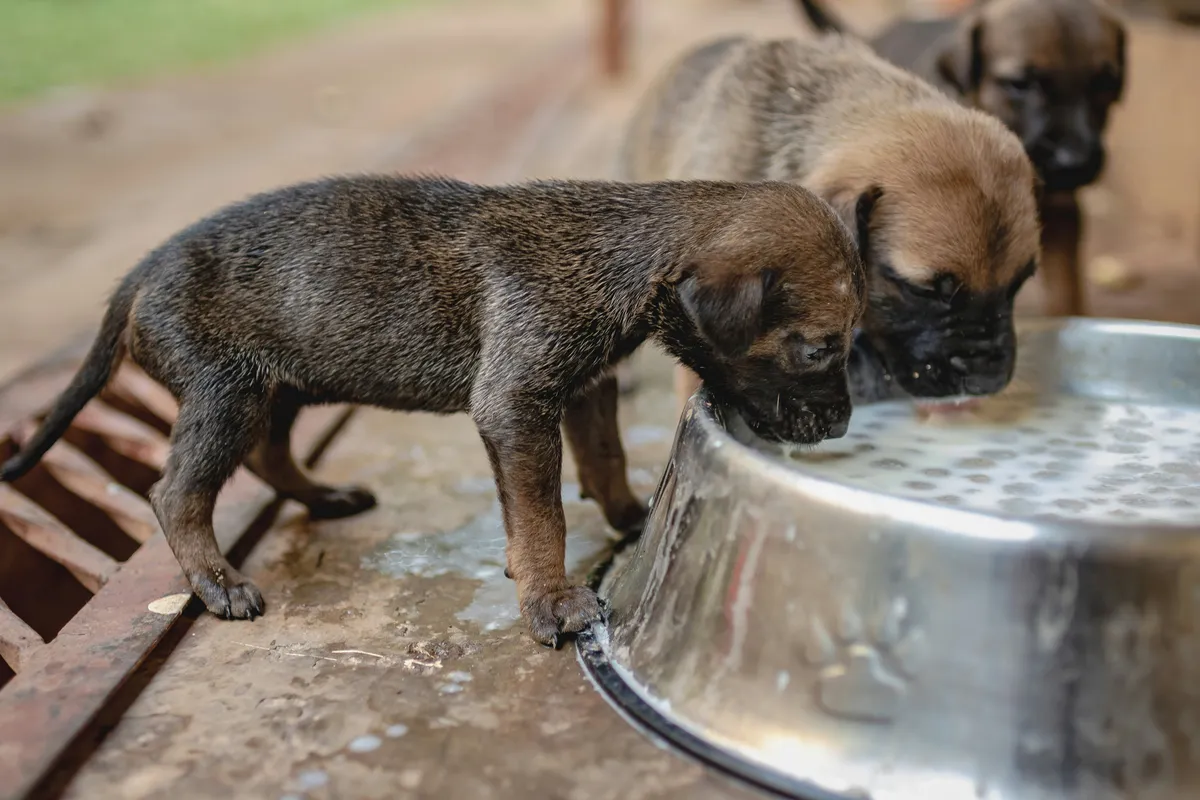
강아지 하루 음수량 기준 — 체중·사료별 적정 물 섭취량
체중 1kg당 하루 40~60ml가 기준(WSAVA). 체중별 음수량 표, 측정 방법, 사료 유형 차이, 다음증 경고까지 수치로 정리합니다.
핵심 기준
강아지의 하루 적정 음수량은 체중 1kg당 약 40~60ml입니다. 단, 이 수치는 순수 음수량 기준이며 사료에 포함된 수분은 별도입니다. 활동량, 기온, 사료 유형에 따라 실제 필요량은 달라집니다.
강아지에게 물은 단순한 음료가 아닙니다. 체내 노폐물을 걸러내는 신장, 소변으로 세균을 씻어내는 방광, 관절을 보호하는 연골까지 — 물이 부족하면 가장 먼저 타격을 받는 곳들입니다. 요로계 질환의 상당수가 만성적인 수분 부족에서 비롯된다는 점에서, 음수량 관리는 치료가 아닌 예방의 영역입니다.
강아지가 하루에 필요한 수분은 물그릇에서 마시는 양과 사료에 포함된 수분 두 가지로 채워집니다. 건식사료(수분 10~12%)만 먹는 강아지는 거의 대부분을 물그릇에서 얻어야 하지만, 습식사료(수분 75~78%)를 먹는 강아지는 식사 자체가 수분 공급원이 됩니다. 같은 체중이라도 먹는 사료에 따라 물그릇 앞에서 마셔야 하는 양이 크게 달라지는 이유입니다.
이 페이지에서는 체중별 권장 음수량 기준표, 집에서 직접 음수량을 측정하는 방법, 계절·활동 상황에 따른 변화, 그리고 반대로 물을 너무 많이 마실 때 의심해야 할 질환까지 순서대로 정리했습니다.
이 페이지의 목차
체중별 하루 권장 음수량
체중 1kg당 40~60ml를 기준으로 계산한 범위입니다. 건식사료 급여 기준이며, 습식사료를 먹는 강아지는 사료에서 수분을 더 섭취하므로 실제 음수량이 이보다 적을 수 있습니다.
| 체중 | 하루 권장 음수량 | 생활 비교 |
|---|---|---|
| 3 kg | 120~180 ml | 종이컵 약 0.5~1잔 |
| 5 kg | 200~300 ml | 종이컵 약 1~1.5잔 |
| 7 kg | 280~420 ml | 생수 작은 병 1개 내외 |
| 10 kg | 400~600 ml | 생수 작은 병 1개 |
| 15 kg | 600~900 ml | — |
| 20 kg | 800~1,200 ml | 생수 큰 병 1개 |
| 30 kg | 1,200~1,800 ml | — |
* 위 수치는 절대 기준이 아닌 참고치입니다. 활동량·기온·사료 유형에 따라 달라집니다. 출처: WSAVA 2018 Congress, Fluid Therapy.
음수량 측정하는 방법
"기준보다 많이 마시는지, 적게 마시는지"를 파악하려면 실제 음수량을 측정해야 합니다. 간단한 방법입니다.
계량컵으로 정해진 양(예: 300ml)을 채운 뒤 양을 기록합니다.
물그릇에 남은 물의 양을 계량컵으로 다시 확인합니다.
채운 양 − 남은 양 = 하루 음수량. 3~7일간 기록하면 평균값을 파악할 수 있습니다.
여러 마리를 키운다면 — 소변 색으로 간접 확인
개별 측정이 어렵습니다. 연한 노란색~거의 무색이면 수분 상태 양호, 진한 노란색~갈색이면 수분 부족 신호일 수 있습니다. 아침 첫 소변은 자연스럽게 더 진하므로 하루 전체를 기준으로 관찰하세요.
사료 유형에 따라 필요한 음수량이 달라진다
사료 자체에 포함된 수분 함량이 다르기 때문에, 어떤 사료를 먹이느냐에 따라 물그릇에서 마셔야 하는 양도 달라집니다.
| 사료 유형 | 평균 수분 함량 | 추가 음수 필요도 |
|---|---|---|
| 건식 (드라이 kibble) | 10~12% | 높음 |
| 반습식 (세미모이스트) | 25~35% | 중간 |
| 동결건조 (프리즈드라이) | 3~8% | 매우 높음 |
| 습식 (캔·파우치) | 75~78% | 낮음 |
| 생식 (BARF) | 60~70% | 낮음 |
건식사료를 먹는 강아지: 사료에서 얻는 수분이 10~12%에 불과하기 때문에, 물그릇에서 체중 기준량에 가까운 양을 모두 채워야 합니다.
습식사료를 먹는 강아지 (75~78% 수분): 사료 자체에서 상당한 수분을 섭취합니다. 습식 비중이 75% 이상이면 추가 음수 없이도 수분 필요량을 충족하는 경우가 많습니다.
동결건조 사료 (주의): 수분 함량이 3~8%로 건식보다도 낮습니다. 급여 전 반드시 충분히 물에 불려서 제공해야 하며, 건조 상태로 급여하면 소화 과정에서 체내 수분을 추가로 소비합니다.
더 자세히
건식사료와 요로 건강 — 갈증 둔화 메커니즘·신장 영향 →
계절·활동·상황별 음수량 변화
체중 기준값은 일반 실내 환경을 전제합니다. 아래 상황에서는 필요량이 달라집니다.
| 상황 | 음수량 변화 | 이유 |
|---|---|---|
| 여름철 (기온 30°C 이상) | 기준의 1.5~2배 | 헐떡임(panting)으로 수분 손실 증가 |
| 운동·산책 직후 | 추가 50~100 ml (소형견 기준) | 체중 2% 이상 수분 손실 시 음수 욕구 증가 |
| 임신견 (후기) | 기준의 1.5배 이상 | 태아 양수·혈액량 증가로 수분 필요량 상승 |
| 수유견 | 기준의 2~3배 | 모유 생산에 수분 다량 소비 |
| 구토·설사 후 | 즉시 추가 공급 필요 | 탈수 진행 빠름 — 수의사 상담 권장 |
| 겨울·실내 난방 | 기준과 동일~약간 증가 | 건조한 실내 공기로 호흡기 수분 손실 |
구토·설사가 있을 때는 수분 손실이 빠릅니다. 억지로 많은 물을 한꺼번에 주지 말고 소량씩 자주 제공하세요. 24시간 이상 지속되거나 혈변·무기력이 동반된다면 수의사 진찰을 받으세요.
다음증 — 너무 많이 마실 때 경고
판별 기준: 체중 1kg당 100ml 이상을 며칠 이상 지속적으로 마신다면 다음증(多飮症, Polydipsia) 가능성이 있습니다. 단순한 수분 보충이 아닌 질환의 전조 신호일 수 있으므로 수의사 진찰을 권장합니다.
함께 나타나는 증상
- ⚠ 소변량이 눈에 띄게 늘었다 (다뇨 동반)
- ⚠ 체중이 이유 없이 감소하고 있다
- ⚠ 식욕이 뚜렷하게 늘었거나 줄었다
- ⚠ 평소보다 무기력하고 활동량이 줄었다
- ⚠ 배가 부어 보인다 (복부 팽만)
의심 질환
당뇨병 (Diabetes Mellitus)
다음·다뇨·체중 감소 3가지가 함께 나타나는 경우 많음
쿠싱증후군 (부신피질기능항진증)
복부 팽만, 탈모, 과식 동반
신장 질환 (CKD)
초기엔 다음다뇨, 진행 시 음수 감소로 전환될 수 있음
자궁축농증 (미중성화 암컷)
물을 갑자기 과하게 마시기 시작하면 즉시 진찰 필요
🧮 더 알고 싶다면 — 칼로리 기준으로 음수량 계산하는 방법 (심화)
+
더 알고 싶다면 — 칼로리 기준으로 음수량 계산하는 방법 (심화)
체중 기준 외에, 칼로리 섭취량 대비 수분량으로도 계산할 수 있습니다. 건강한 성견 기준으로 하루 섭취 칼로리(kcal ME) 1kcal당 약 1ml의 수분이 필요합니다.
계산 예시 — 5kg 강아지, 하루 400kcal 섭취
- →
총 필요 수분: 약 400ml
- →
건식사료(수분 10%)로 400kcal 섭취 시 → 사료에서 얻는 수분 약 40ml
- →
물그릇에서 마셔야 할 양: 약 360ml
이 방식은 체중 기준보다 정밀하지만, 일반 보호자가 매일 계산하기는 어렵습니다. 참고 수준으로 이해하는 것으로 충분합니다.
자주 묻는 질문
강아지 음수량을 집에서 어떻게 측정하나요? +
여름에는 음수량 기준이 달라지나요? +
물을 갑자기 많이 마시기 시작했는데 괜찮나요? +
퍼피의 음수량 기준도 성견과 같나요? +
소변 색으로 수분 상태를 확인할 수 있나요? +
수분 섭취 늘리는 습식·소프트 사료
참고 문헌
- [1]WSAVA 2018 Congress, Fluid Therapy — The Essentials (vin.com)
- [2]WSAVA 2013, Water: The Forgotten Nutrient (vin.com)
- [3]FDA, Complete and Balanced Pet Food (fda.gov)
- [4]Purina Institute, Differences Between Dry, Semi-Moist and Wet Pet Foods
- [5]Merck Veterinary Manual, Polyuria and Polydipsia