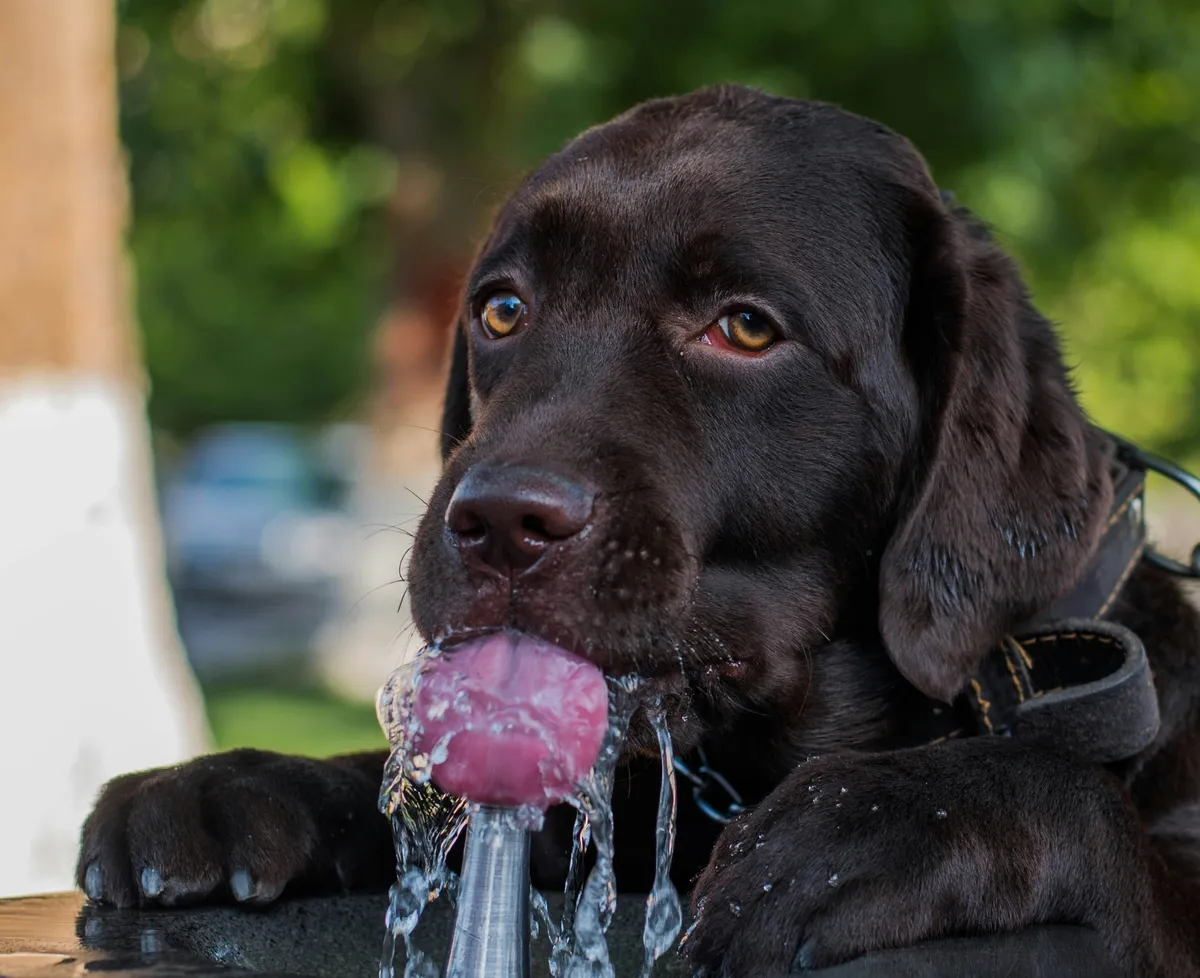
Labrador retriever drinking from a water fountain

water_dropUrinary Health

Dry Food & Urinary Health — What Chronic Moisture Deficit Does

Dry kibble is convenient and affordable. But from a urinary health perspective, an exclusively dry food diet has a structural weakness that needs to be addressed.

Thirst Blunting MechanismKidney StrainBUN & CreatinineHydration Solutions

Long-Term Dry Food Feeding Blunts Thirst Perception

Wild prey eaten by canids contains approximately 60–70% moisture. Dogs evolved with this as the baseline — their bodies are designed to obtain moisture primarily from food. As a result, the thirst-sensing system is less robustly developed than in animals adapted to dry diets[1].

After long-term feeding of 10–12% moisture kibble[2]

The body begins to recognize this low-hydration state as ‘normal.’ Thirst signals become progressively dulled, and a pattern develops where the dog doesn't seek water even when dehydration is progressing. This is one of the primary reasons kibble-fed dogs drink so little — not a personality quirk.

How Chronic Moisture Deficit Affects the Kidneys

The kidneys filter blood and excrete waste through urine. Adequate hydration is essential for this process.

arrow_right

The kidneys must continuously produce highly concentrated urine

arrow_right

This places cumulative strain on kidney tissue over time

arrow_right

Highly concentrated urine creates conditions where minerals can precipitate in the bladder and urinary tract

arrow_right

Risk of urinary stones and bladder infections increases

BUN, Creatinine & Regular Testing[3]

BUN (blood urea nitrogen) and creatinine (Creatinine) are blood markers used to assess kidney function. Chronic moisture deficit can cause these values to rise gradually. The problem is that early-stage damage produces no obvious symptoms.For dogs aged 7 and older, annual or biannual blood and urine testing is the most reliable way to catch problems early.

Ways to Supplement Hydration While Staying on Dry Food

Supplementing moisture doesn't require switching foods.

water

Soak Dry Kibble Before Serving (Easiest)

Add warm water to dry kibble and let it soak for 15–20 minutes before serving. Moisture is delivered through the food itself — effective even for dogs that don't actively seek out the water bowl.

blender

Mixed Feeding

Combine dry kibble with wet food (canned or pouch). The high moisture content of wet food (75–78%) raises the overall moisture density of the meal. Start with a ratio of 70–80% dry + 20–30% wet.

soup_kitchen

Food Toppers

Add a small amount of unsalted, onion-free chicken broth, a spoonful of wet food, or moisture-rich vegetables (cucumber, a small amount of carrot) on top of the kibble. This attracts interest through scent while boosting hydration.

When to Consider Switching Food Types

If water intake problems recur or your dog has a history of urinary disease, reconsidering the food type itself may be the most fundamental solution.

SituationRecommended Direction
History of urinary stonesIncrease wet food ratio or consider prescription diet
Drinks almost no waterMixed feeding or transition to wet food
Senior dog (7+)Consider transitioning to higher-moisture food
Kidney values at borderlineConsult vet about food type before changing
ac_unit

Deep Dive — Freeze-Dried Food & Moisture: A Commonly Missed Trap

expand_more

Freeze-dried food contains only 3–8% moisture — even lower than regular dry kibble[4].

Many owners choose freeze-dried as a ‘premium, high-protein option,’ but it must always be thoroughly rehydrated with water before serving. Feeding it dry forces the digestive process to draw additional moisture from the body — which can worsen dehydration in dogs that already drink too little.

warning

Always soak freeze-dried food in adequate water before serving. Dry feeding can worsen dehydration.

References

  1. [1]

    WSAVA 2013, Water: The Forgotten Nutrient (vin.com)

  2. [2]

    FDA, Complete and Balanced Pet Food (fda.gov)

  3. [3]

    Merck Veterinary Manual, Chronic Kidney Disease in Dogs

  4. [4]

    Purina Institute, Differences Between Dry, Semi-Moist and Wet Pet Foods

Related Guides

local_hospital

This content is for informational purposes only and does not replace veterinary diagnosis or treatment. If your dog has a history of urinary disease, consult a veterinarian before changing food types.