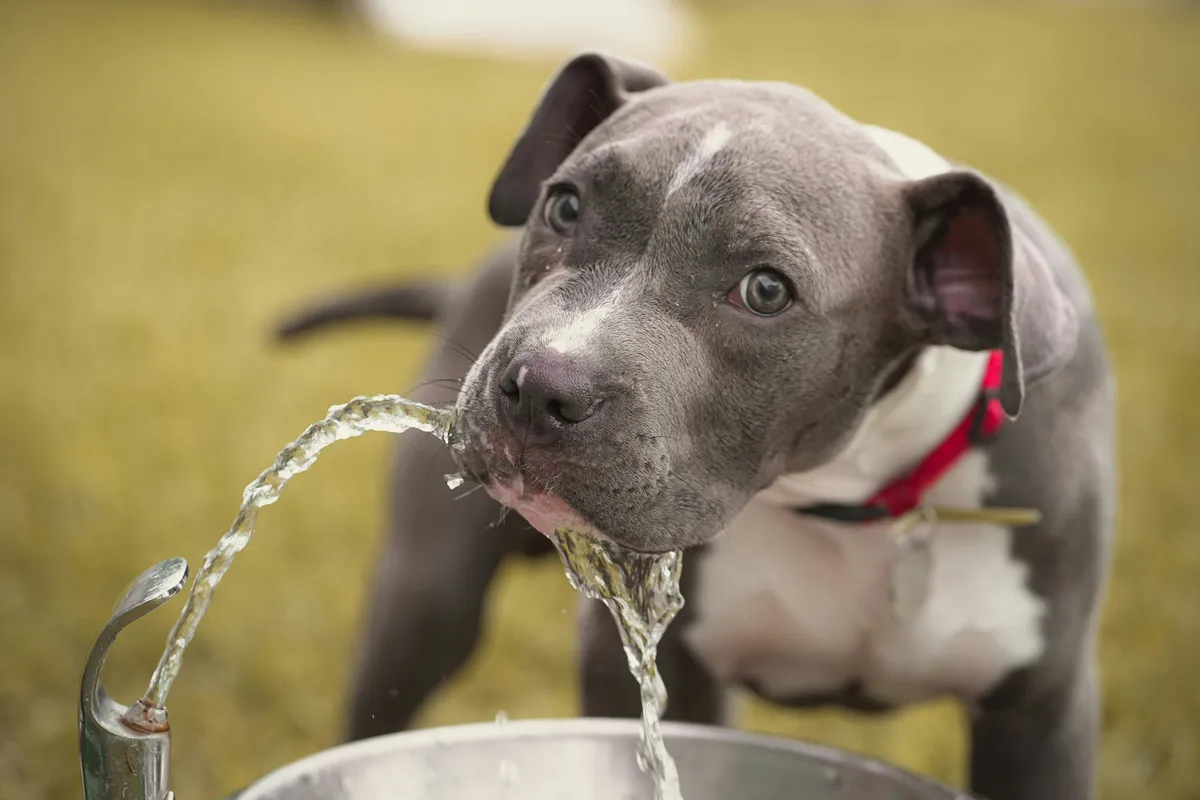
Dog drinking from stainless steel water bowl

water_dropUrinary Health

My Dog Won't Drink Water

“She just doesn't drink much — maybe that's just her.” If that sounds familiar, it's worth a second look. Dogs cannot tell you they're thirsty. A drop in water intake may be the first signal the body sends.

7 CausesWarning Signs5 SolutionsWSAVA & Merck Referenced

Why Won't They Drink? — 7 Causes

Bowl Problems — Material, Location, Height

Plastic bowls harbor bacteria easily and retain odors in microscopic scratches. Dogs with sensitive noses may refuse the smell of plastic outright. Simply switching to stainless steel or ceramic can increase water intake. Location matters too — avoid placing the bowl next to the food bowl, near the toilet area, or in a high-traffic hallway.

The Water Itself — Smell, Temperature, Freshness

Some dogs reject the chlorine smell in tap water or water left standing for more than a day. Switching to filtered water or offering slightly warm water (near body temperature, 30–35°C) often changes their response.

Long-Term Dry Food Feeding — Thirst Perception Dulls

Dogs fed exclusively on dry food for extended periods may develop reduced sensitivity to thirst signals. Unlike wild prey with 60–70% moisture, extremely dry kibble (10–12% moisture) causes the body to 'adapt' to a low-hydration state. Dehydration can progress without the dog feeling thirsty. (WSAVA 2013, Water: The Forgotten Nutrient)

Dry food and urinary health — read morearrow_forward

Pain or Physical Discomfort — Watch the Posture

Drinking requires lowering the head and extending the neck. Dogs with cervical (neck) pain or oral pain (dental disease, stomatitis) may avoid this posture. Try elevating the water bowl. If intake improves, cervical discomfort may be the cause — and veterinary examination is needed.

Stress and Environmental Change

Moving, a new family member, changes in the owner's schedule, sudden weather changes — all can affect both water intake and appetite. If other routines are normal but drinking has dropped, consider recent changes in the environment.

Senior Dogs — Declining Thirst Recognition

Dogs aged 7 and older experience age-related decline in osmoreceptor function — the thirst-sensing system. They may not seek water even when dehydration is actively progressing. (WSAVA 2013, Water: The Forgotten Nutrient) Rather than waiting for senior dogs to drink, proactively create an environment that encourages hydration.

Symptom of Underlying Disease

In early kidney disease, reduced water intake and appetite loss may appear together. Early bladder infections can also change drinking patterns alongside urination changes. If the warning signs below are present, do not try to manage this at home — prioritize a veterinary visit.

Warning Signs to Check Right Now

If any of these appear alongside reduced water intake, prompt veterinary attention may be needed.

Urination Changes

  • warningUrine color has become dark yellow or brownish
  • warningNoticeably reduced urine volume
  • warningConversely, very frequent urination in small amounts

Systemic Symptoms

  • warningReduced appetite accompanying the change
  • warningOne or more episodes of vomiting
  • warningMore lethargic or low-energy than usual
  • warningDry or pale gums

Dehydration Self-Check (for reference only)[3]

Gently pinch the skin on the back of the neck, lift slightly, and release. If it snaps back within 1–2 seconds, hydration is likely normal.If it takes 3 seconds or longer to return, dehydration is possible — veterinary examination is recommended.

5 Ways to Increase Water Intake Today

1

Change the Bowl

Switch from plastic to stainless steel or ceramic. Daily cleaning and fresh water at least twice a day are the minimum baseline.

2

Change the Water

Switch to filtered or boiled-and-cooled water, or offer slightly warm water (30–35°C). A tiny amount of unsalted, onion-free chicken broth diluted in water can attract interest through scent.

3

Add More Water Stations

Placing bowls in multiple locations around the home encourages casual drinking during movement. Add a bowl near a favorite resting spot or play area.

4

Add Moisture Directly to Food

Soak dry kibble in warm water for 15–20 minutes before serving. Mixing in a small portion of wet food is also effective at increasing total moisture intake.

5

Use a Water Fountain

Many dogs are attracted to flowing water. However, failing to replace filters on schedule can make a fountain a worse bacterial risk than a regular bowl — follow the manufacturer's replacement schedule.

health_and_safety

Deep Dive — Chronic Dehydration & Kidney Impact

expand_more

Chronic low-level dehydration forces the kidneys to continuously produce highly concentrated urine. Over time, this places cumulative strain on kidney tissue. Highly concentrated urine also creates conditions where minerals can precipitate in the bladder and urinary tract, raising the risk of urinary stones and bladder infections.

BUN & Creatinine — The Silent Markers

BUN (blood urea nitrogen) and creatinine are blood markers used to assess kidney function. Chronic moisture deficit can cause these values to rise gradually. The critical issue is that early-stage kidney damage typically produces no obvious symptoms.For dogs aged 7 and older, annual or biannual blood and urine testing is the most reliable way to catch problems early.

Full article: Dry Food & Urinary Healtharrow_forward

자주 묻는 질문

Q. How much water should a dog drink per day?

Approximately 40–60 ml per kg of body weight is the reference (WSAVA 2018, Fluid Therapy — The Essentials). A 5 kg dog needs roughly 200–300 ml per day. However, this varies based on activity, temperature, and food type — dogs eating wet food need considerably less from the bowl.

Q. My dog suddenly stopped drinking as much. How long should I wait before seeing a vet?

If reduced intake persists for more than 2 days, or if reduced appetite, vomiting, or lethargy appear at the same time, do not wait — see a vet. If it's an isolated change with no other symptoms, try changing the bowl and water type first and monitor for a day or two.

Q. Can I add chicken broth to the water?

Unsalted, onion-free, scallion-free chicken broth can be diluted in small amounts. Most commercial broths have high sodium content and are unsuitable for dogs. Use broth made at home by simmering plain chicken, or choose a pet-specific product.

Q. Do water fountains actually help?

They work well for dogs attracted to flowing water. However, if filters aren't replaced regularly, a fountain can carry higher bacterial contamination risk than a plain bowl. Always follow the manufacturer's recommended filter replacement schedule.

Q. My senior dog barely drinks. Is that normal?

No — it is common, but not safe. Dogs aged 7 and older experience natural decline in osmoreceptor function, meaning they lose some ability to detect thirst even when dehydrated. Senior dogs should have proactive hydration support: elevated bowls, multiple water stations, and moisture added to food. Annual blood and urine testing is also recommended to catch early kidney changes.

References

  1. [1]

    WSAVA 2013, Water: The Forgotten Nutrient (vin.com)

  2. [2]

    WSAVA 2018 Congress, Fluid Therapy — The Essentials (vin.com)

  3. [3]

    Merck Veterinary Manual, Dehydration in Animals

Related Guides

local_hospital

This content is for informational purposes only and does not replace veterinary diagnosis or treatment. If reduced water intake persists beyond 2 days or is accompanied by other symptoms, consult a veterinarian.