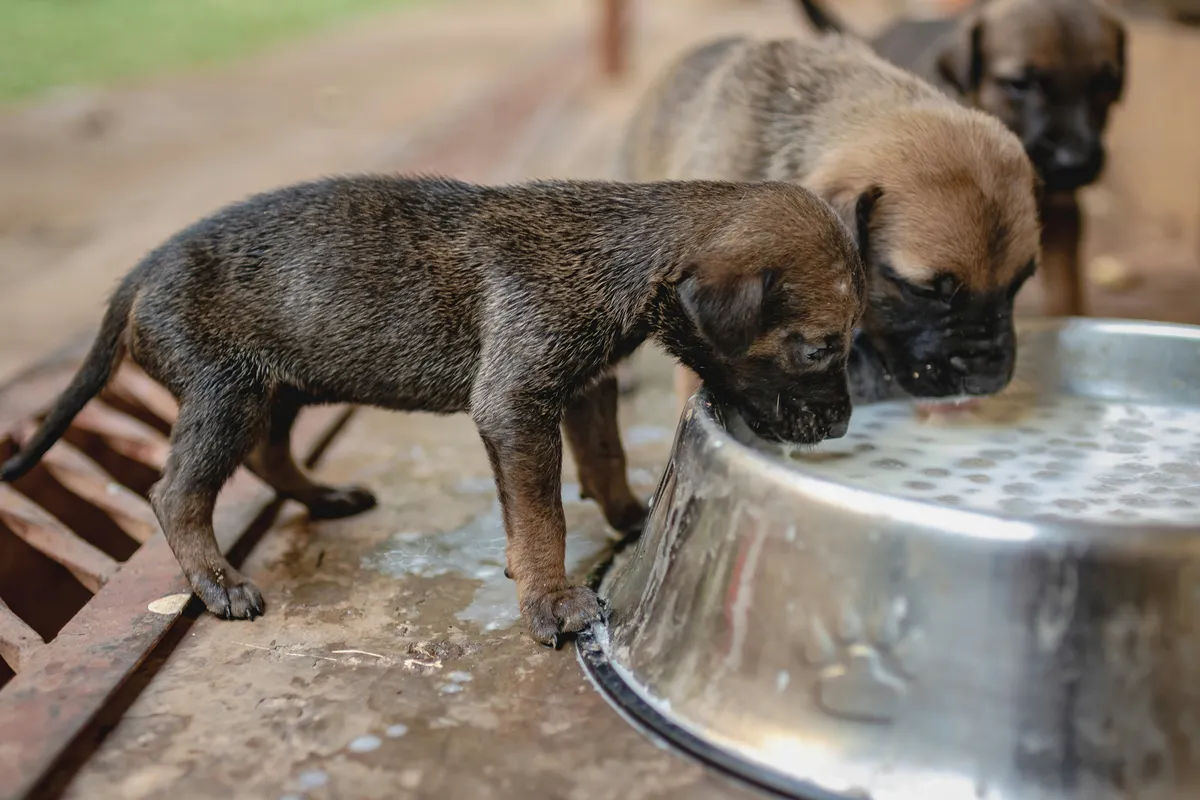
요로·음수 건강 가이드
수분 부족은 소변을 농축시켜 요로결석과 방광염 위험을 높입니다. 사료 유형과 생활 습관이 모두 영향을 미칩니다.
핵심 요약
- 권장 음수량: 체중 1kg당 하루 40~60ml (WSAVA) 5kg 강아지 200~300ml, 10kg 400~600ml
- 건식사료(수분 10%) vs 습식사료(수분 78%) — 차이가 크다 건식만 급여 시 만성 경미한 탈수 위험
- 소변 색이 진한 노란색이면 수분 부족 신호 연한 노란색이 정상, 갈색이면 즉시 수의사
- 요로결석 진단 시 임의 사료 변경 금지 결석 유형(스트루바이트 vs 옥살산칼슘)마다 처방식이 다름
사료 유형이 요로 건강에 미치는 영향
건식사료의 수분 함량은 약 10%입니다. 습식사료(약 75~80%)와 비교하면 절대적인 수분 공급량이 크게 낮아, 건식만 급여하는 경우 소변이 농축되고 요로결석(스트루바이트, 옥살산칼슘) 위험이 높아질 수 있습니다. 건식사료를 유지하면서 수분을 보충하려면 물 혼합, 습식 병행, 음수 분수 사용, 무염 뼈 육수 첨가 방법이 효과적입니다.
WSAVA(2021) 기준 권장 음수량은 체중 1kg당 하루 40~60ml입니다. 소변 색으로 상태를 간단히 확인할 수 있는데, 연한 노란색이 정상이며 진한 노란색은 수분 보충이 필요하다는 신호입니다. 활동량이 많거나 기온이 높은 날에는 기준량보다 20~30% 더 필요합니다.
요로결석이 이미 진단된 경우에는 임의로 사료를 바꾸지 마세요. 결석의 종류에 따라 처방식이 완전히 다르며, 잘못된 사료 선택은 오히려 결석을 악화시킬 수 있습니다. 반드시 수의사 처방 아래 dissolution diet를 선택하세요.
40~60ml
체중 1kg당 일일 권장 음수량 (WSAVA)
10% vs 78%
건식 vs 습식 사료의 수분 함량
요로결석 ↑
만성 탈수 시 소변 농축 위험 증가
요로·음수 건강의 핵심 원칙
수분 부족은 소변을 농축시켜 요로결석과 방광염 위험을 높입니다. 사료 유형과 생활 습관이 모두 영향을 미칩니다.
7가지
음수 거부의 주요 원인
- ·건식사료만 급여하는 개는 삼투압 수용체(osmoreceptor) 반응이 둔화되어 갈증을 덜 느낍니다. 이는 만성적 경미한 탈수 상태로 이어질 수 있습니다.
- ·물그릇 소재(금속·플라스틱 냄새), 위치(소음·사람 통행 많은 곳), 청결 상태가 음수량에 영향을 줍니다. 그릇을 매일 세척하고, 여러 곳에 배치하는 것이 효과적입니다.
- ·노령견은 신장 기능 저하와 갈증 인식 둔화가 동시에 진행돼 수분 부족을 자각하지 못하는 경우가 많습니다. 이 시기에는 습식 사료 병행이 특히 중요합니다.
- ·치과 질환이나 구강 통증이 있으면 물을 마시는 행위 자체가 불편해집니다. 음수량이 갑자기 줄었다면 구강 검진을 먼저 고려하세요.
- ·수돗물의 염소 냄새나 지역별 미네랄 함량 차이가 거부감으로 이어지기도 합니다. 정수기 물이나 미지근한 물을 시도해보세요.
40~60ml/kg
체중 1kg당 일일 권장 음수량
- ·WSAVA(2021) 기준으로 강아지의 일일 권장 수분 섭취량은 체중 1kg당 약 40~60ml입니다. 예: 체중 5kg 강아지는 하루 200~300ml, 10kg는 400~600ml 섭취가 목표입니다.
- ·사료 유형에 따라 음수 필요량이 크게 달라집니다. 건식사료(수분 약 10%)를 급여하는 경우 물을 많이 마셔야 하지만, 습식사료(수분 약 75~80%)는 사료 자체에서 수분을 다량 공급합니다.
- ·소변 색으로 수분 상태를 간단히 체크할 수 있습니다. 연한 노란색이 정상이며, 진한 노란색이나 갈색이면 탈수를 의심하고 수의사 진료를 권장합니다.
- ·활동량, 기온, 수유 여부(수유 중 암컷)에 따라 필요량이 증가합니다. 여름이나 운동 후에는 기준량보다 20~30% 더 많이 마실 수 있도록 신선한 물을 충분히 제공하세요.
10% vs 78%
건식 vs 습식 사료의 수분 함량
- ·건식사료의 수분 함량은 약 10%로, 습식사료(약 75~80%)와 비교해 현저히 낮습니다. 건식사료만 급여하면 소변이 농축되어 요로결석(스트루바이트, 옥살산칼슘) 위험이 높아질 수 있습니다.
- ·Grant(2010): 건식사료 급여 고양이(개에서도 유사한 경향)는 습식 급여 군 대비 소변 비중이 높게 나타나 만성 탈수 위험이 증가합니다.
- ·건식사료를 유지하면서 수분 보충을 원할 경우 ① 그릇에 물 혼합, ② 별도 습식 급여 병행, ③ 음수 분수 사용, ④ 뼈 육수(무염) 첨가 등의 방법이 효과적입니다.
- ·요로결석이 의심되거나 진단을 받은 경우, 임의로 사료를 변경하지 말고 수의사 처방 요로 처방식(dissolution diet)을 선택해야 합니다. 결석 유형에 따라 처방식 종류가 다릅니다.
상황별 핵심 전략 요약
각 세부 가이드에서 구체적인 음수 유도 방법과 사료 선택 기준을 확인하세요.
| 상황 | 핵심 전략 | 세부 가이드 |
|---|---|---|
| 강아지가 물을 안 마실 때 | 습식 병행 + 음수 환경 개선 + 원인 파악 | → 물 안 마셔요 |
| 하루 음수량이 적절한지 확인 | 체중 1kg당 40~60ml 기준 + 소변 색 체크 | → 하루 음수량 기준 |
| 건식사료 장기 급여 중 | 수분 보충 전략 + 정기 소변검사 권장 | → 건식사료와 요로 건강 |